Dear reader, we’re taking a break from the memoir-in-progress to assess the accomplishments of the past year. My husband and I closed on the 126-year-old Methodist church just shy of a year ago, and the changes have been immense. For the next few days, I’m telling the story in before-and-after photos. Whenever possible I’ll try to use the same perspective in the “after” shot as I did long ago in the “before.” We check out the guest bath today.
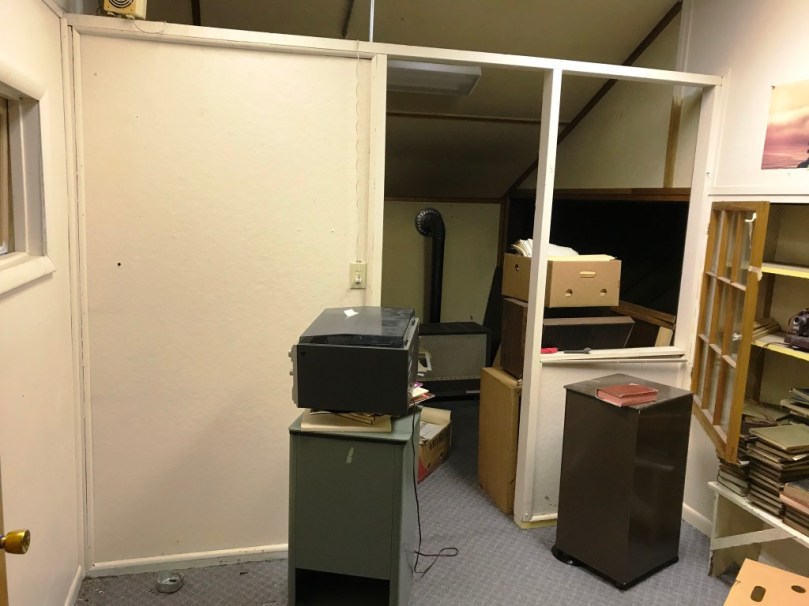
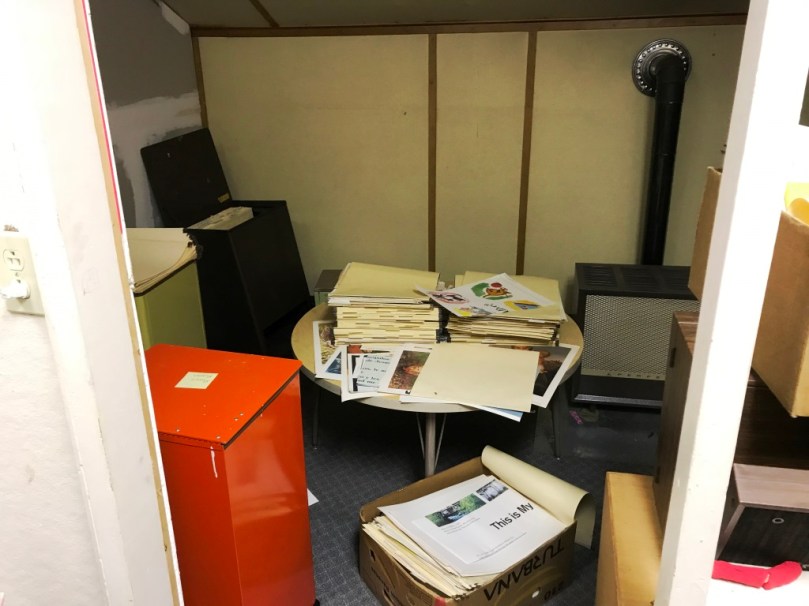
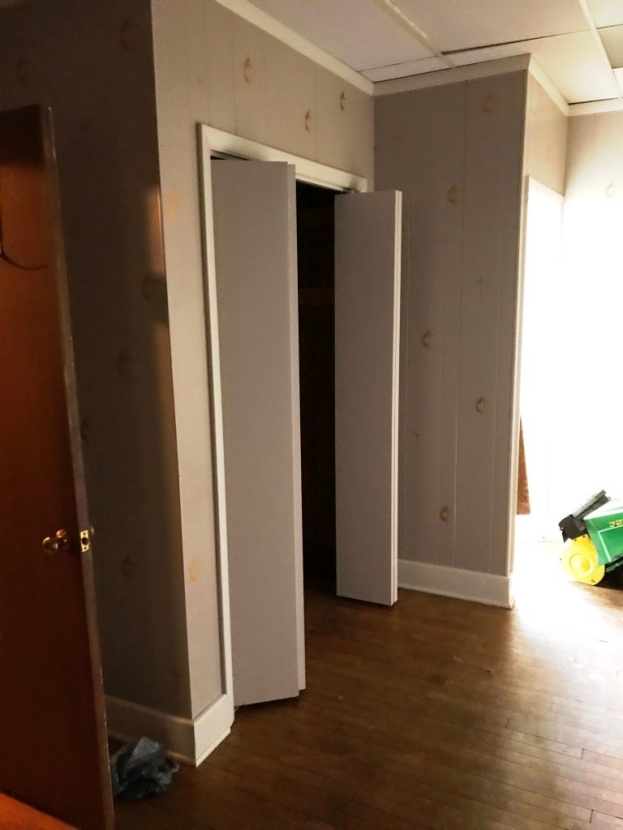
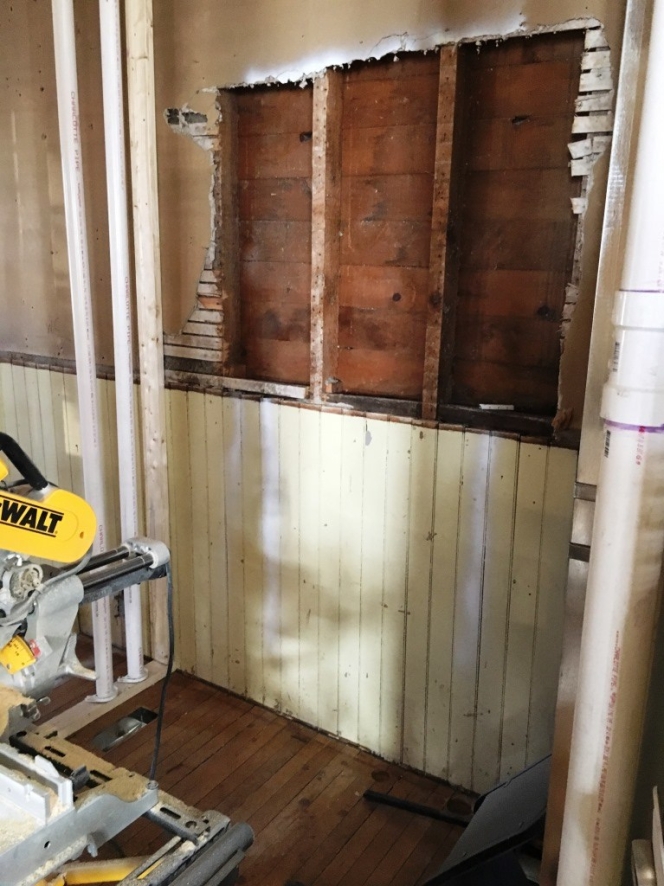
I’m not entirely sure what this room in the church was. It was filled with a decades worth of Sunday School lessons and choir music. But it also had a gas heater. Maybe the walls were erected after the heater was installed.We tore the old wall down and built a new one to enclose the guest bath. From the beginning, we knew we would locate a bathroom here because it’s directly above the master bath which is directly above the old church kitchen in the basement, and it was easier to run plumbing here. To the right, you can see part of the doorway to the balcony.This is the old storage room before.This is the inside of the bathroom now. A bit of work is still required. We’re missing vanity drawers, we need another coat of paint and the tub needs a surround, but we’re getting there. Given what was in there to begin with, I suppose the space could use a little reading material, too. Once we opened up the choir loft, heating the space was no longer an issue.
Dear reader, we’re taking a break from the memoir-in-progress to assess the accomplishments of the past year. My husband and I closed on the 126-year-old Methodist church just shy of a year ago, and the changes have been immense. For the next few days, I’m telling the story in before-and-after photos. Whenever possible I’ll try to use the same perspective in the “after” shot as I did long ago in the “before.” We’ve surveyed the main floor, and now we go upstairs. It’s not all that big, but I’m breaking it up into five rooms. First, we’ll take a look at my office.
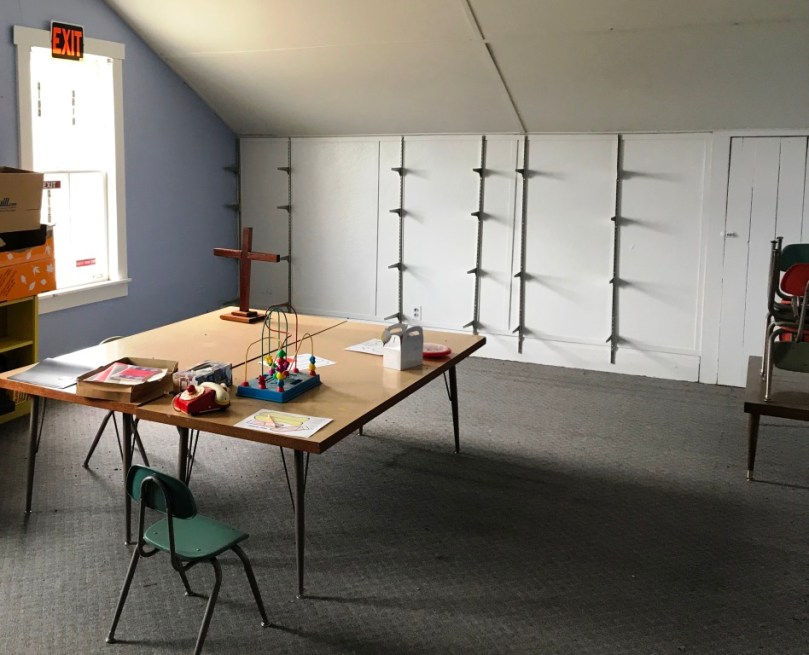
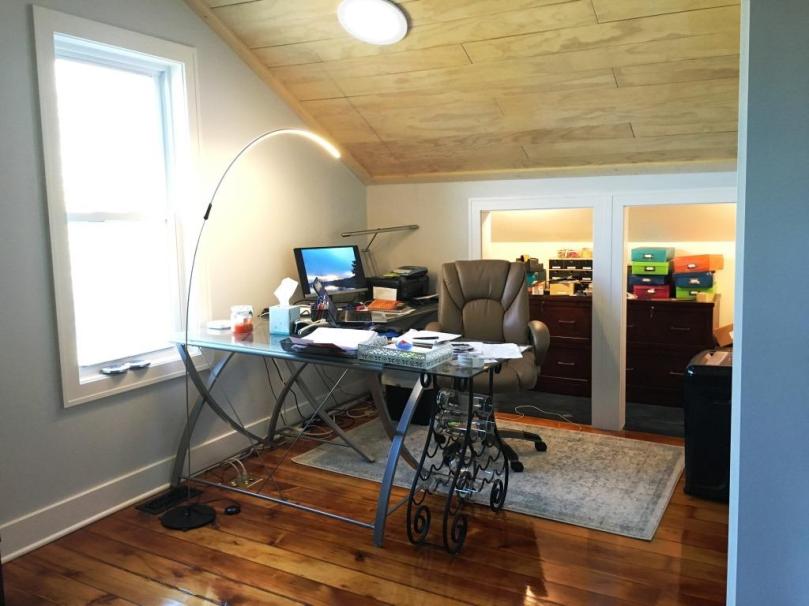
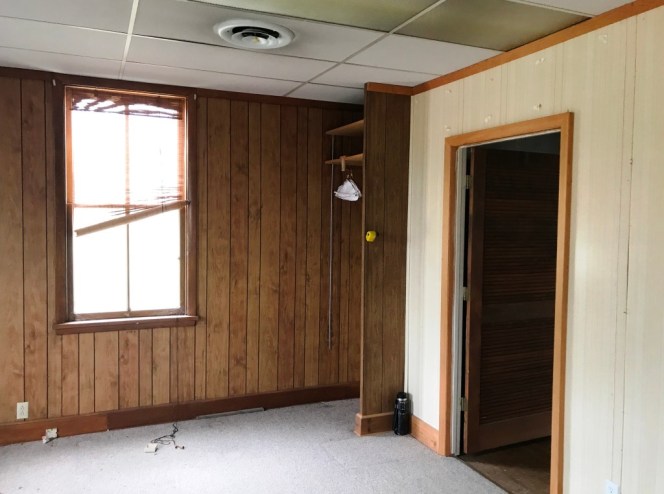
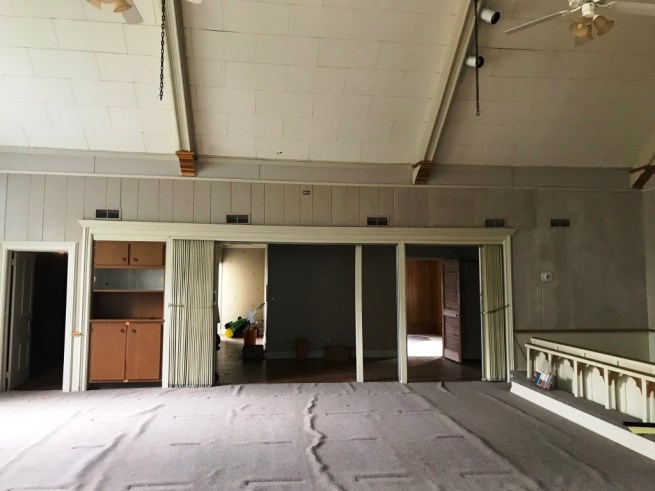
When we purchased the church, it looked like the second story was last used as a Sunday School room. I think the local Alcoholics Anonymous group also may have been meeting here. Nearly everything you see in this shot was removed, including the wall with shelving and the carpeting. The window you can see in this shot led to the fire escape, which we removed a few months ago.This corner is now my office. The eaves (where a pile of colorful boxes is) goes along the entire roof line and is great for storing luggage.
Dear reader, we’re taking a break from the memoir-in-progress to assess the accomplishments of the past year. My husband and I closed on the 126-year-old Methodist church just shy of a year ago, and the changes have been immense. For the next week or so, I’m going to tell the story in before-and-after photos. Whenever possible I’ll try to use the same perspective in the “after” shot as I did long ago in the “before.” Today, we have a look in the master bath.
I’ve shared pictures of the shower corner of the master bath before. This perspective shows where the water closet was built. When we bought the church, this room was being used as an office. At one time in history, this area was a Sunday School.I had to sit on the vanity and take a panoramic picture to get this perspective because we moved the wall to make the bedroom behind it larger (the panorama is why the floor looks wavy in the picture). That’s another pocket door on the water closet. The door on the right is one of the linen closets.
Dear reader, we’re taking a break from the memoir-in-progress to assess the accomplishments of the past year. My husband and I closed on the 126-year-old Methodist church just shy of a year ago, and the changes have been immense. For the next week or so, I’m going to tell the story in before-and-after photos. Whenever possible I’ll try to use the same perspective in the “after” shot as I did long ago in the “before.” Today, we look at the master bedroom.
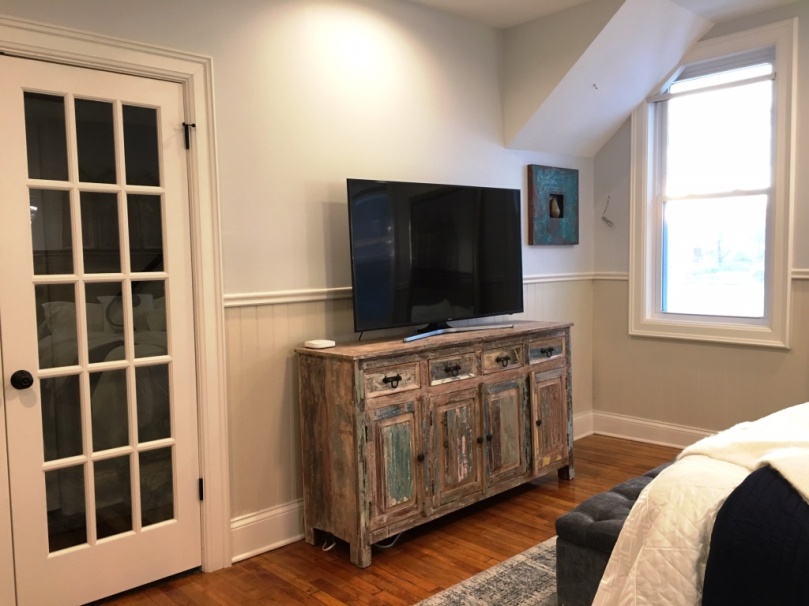
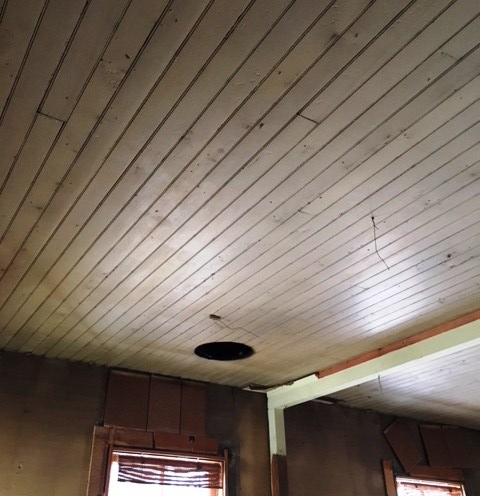
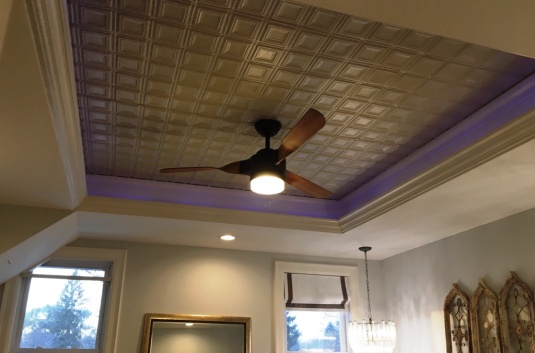
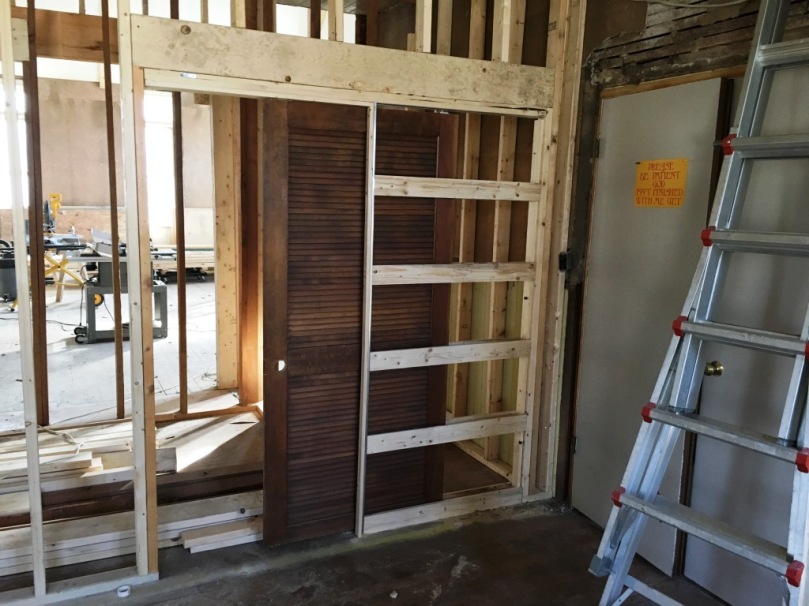
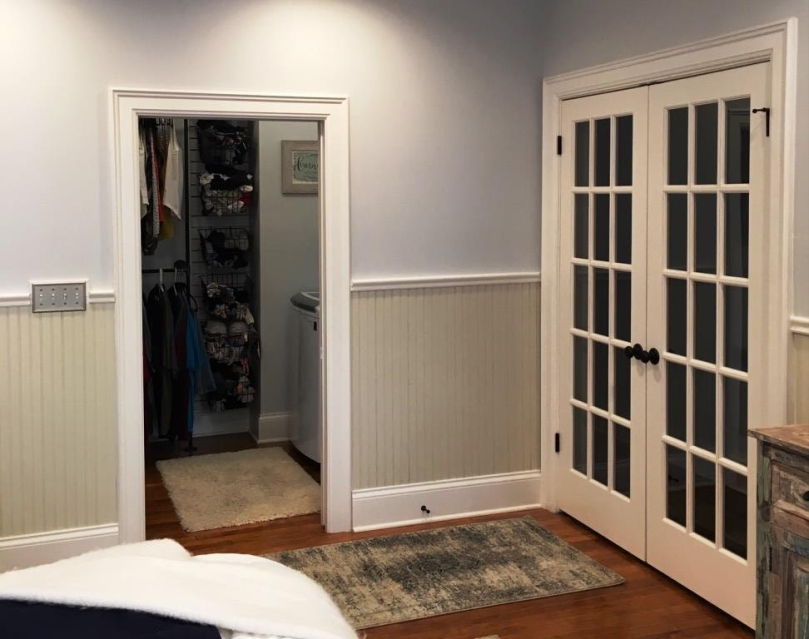
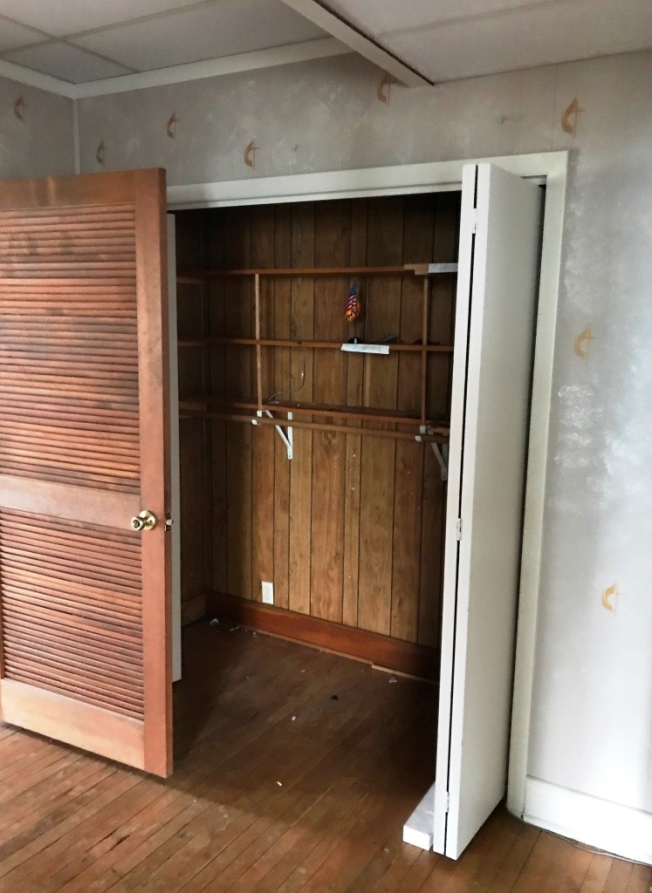
I’ve shown off pictures of the headboard side of the master bedroom before; that side didn’t exist when we purchased the church. Today, we look at the south side of the bedroom. When we purchased the church, there was an exterior stairway and doorway and a closet on this side of the room. Both were removed.Removing the doorway revealed the window. A TV on an imported cabinet now sits where the closet used to be. The foot of the bed is just showing in the bottom right.Initially, I wanted to show off the wood slats of the original ceiling in the master bedroom, but there were too many holes.So we repurposed the tin ceiling from the basement inside the tray ceiling. I love looking up at this ceiling when I’m in bed. Tyler says it’s a good think I like it because it was a lot of work.This is look mid-construction of the east side of the master bedroom. This is the pocket door leading to the closet.Here’s a look at the east side of the master bedroom now, complete with French doors.
Dear reader, we’re taking a break from the memoir-in-progress to assess the accomplishments of the past year. My husband and I closed on the 126-year-old Methodist church just shy of a year ago, and the changes have been immense. For the next week or so, I’m going to tell the story in before-and-after photos. Whenever possible I’ll try to use the same perspective in the “after” shot as I did long ago in the “before.” Yesterday, we checked out the back door, and today we proceed down the hallway to the left of the kitchen that we’re calling The Hall of History.
The Hall of History leads to the master suite and the back stairway to the second floor. We intend to hang historical images of the church and pictures of our ancestors here so we chose to keep this hallway as original as possible. The door to the hallway is original, we left some of the paint patina on the floor and all the light fixtures were found elsewhere in the church when we purchased it.
Here’s a closer look at the back steps which were rebuilt and recarpeted (I finally removed the sticky-backed protective plastic covering for this “after” photo). We also had new hand railing fabricated. The walls on the stair landing are shiplap we simply painted after removing the paneling (no Sheetrock there). The door on the left leads to a closet beneath the belfry; this area used to be the original entrance to the church. The French doors on the right lead to the master bedroom.
Here’s a look from the stairway back through the Hall of History into the great room. You can see the antique light fixtures a bit better here.
# # #
Today’s headline is a quote from modern Uruguayan journalist and novelist Eduardo Galeano.
Dear reader, we’re taking a break from the memoir-in-progress to assess the accomplishments of the past year. My husband and I closed on the 126-year-old Methodist church just shy of a year ago, and the changes have been immense. For the next week or so, I’m going to tell the story in before-and-after photos. Whenever possible I’ll try to use the same perspective in the “after” shot as I did long ago in the “before.” Yesterday, we looked at the kitchen and balcony, and today we take a peek into the mudroom (the alcove to the right of the kitchen).
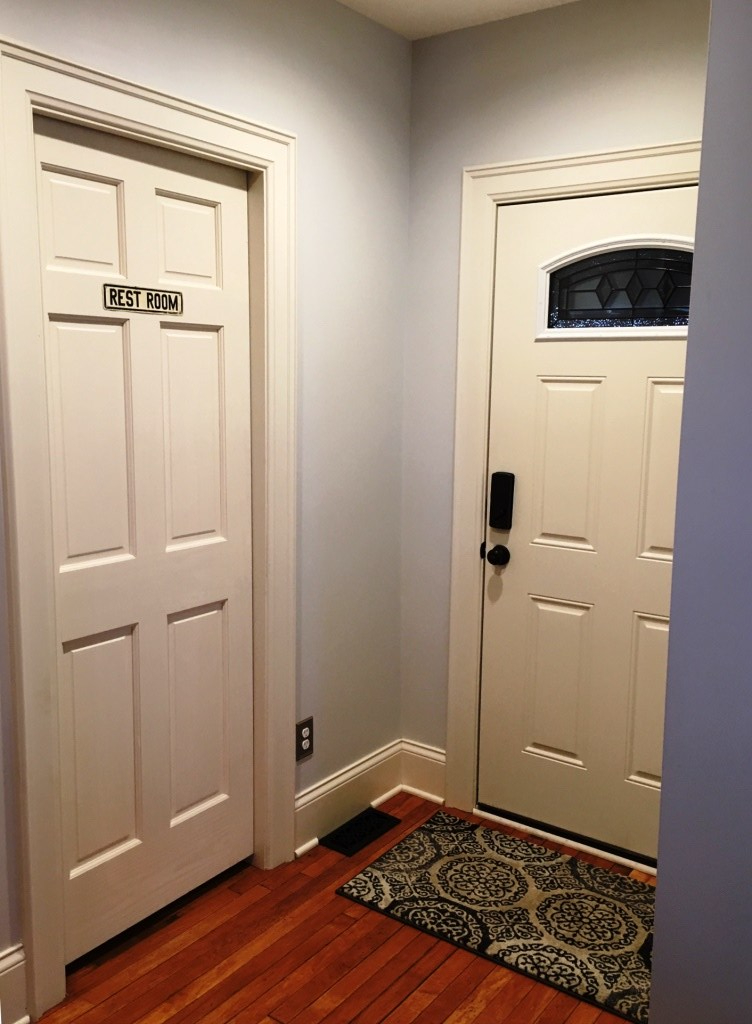
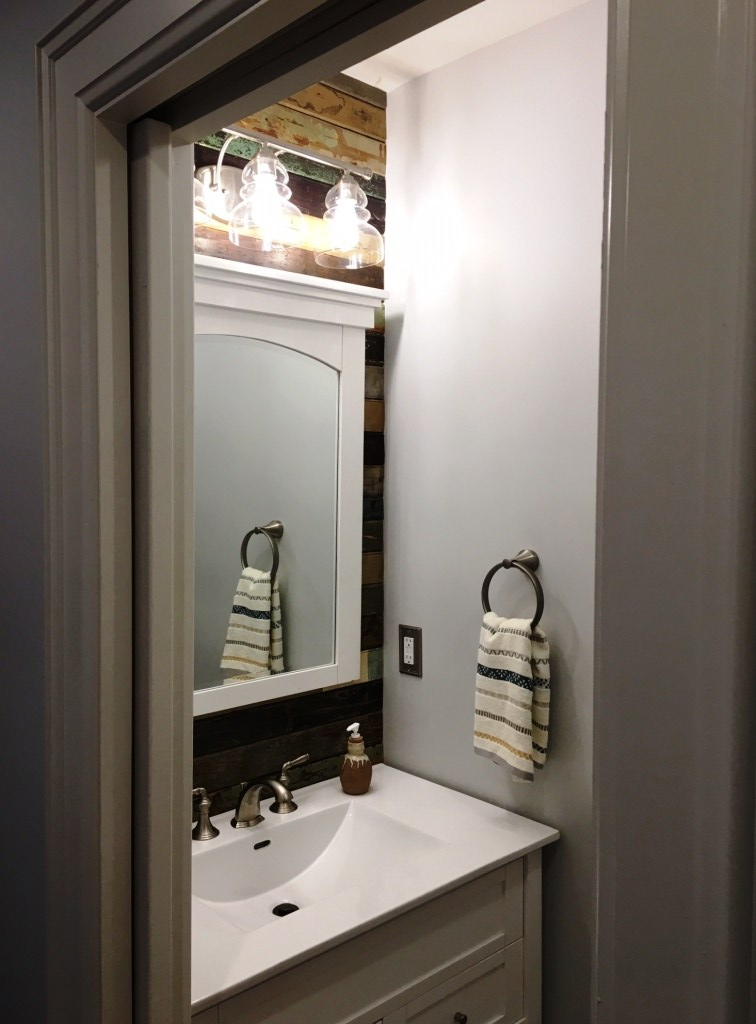
When we purchased the church, there was a closet in the space that would someday become our back door and mudroom.About three months into the renovation, we’d pinpointed where we wanted a back door, but we hadn’t opened it up yet because it would have been a door to nowhere–the garage hadn’t yet been built.Here’s how the mudroom looks today. The doorway to the left is a pocket door that leads to the powder room. the “rest room” sign was salvaged from the basement, which was the only operational bathroom in the church when we bought it. The door on the right leads to the garage.Here’s a peek inside the powder room. The wall behind the mirror is reclaimed wood from the basement ceiling (we also used this wood on our master bedroom headboard).
Tomorrow: The Hall of History. See it in all its before-and-after glory here.
Dear reader, we’re taking a break from the memoir-in-progress to assess the accomplishments of the past year. My husband and I closed on the 126-year-old Methodist church just shy of a year ago, and the changes have been immense. For the next week and half or so, I’m going to tell the story in before-and-after photos. Whenever possible I’ll try to use the same perspective in the “after” shot as I did long ago in the “before.” Yesterday, we walked into the former sanctuary to see a fireplace where the altar used to be. Now we turn to the left to take in the kitchen.
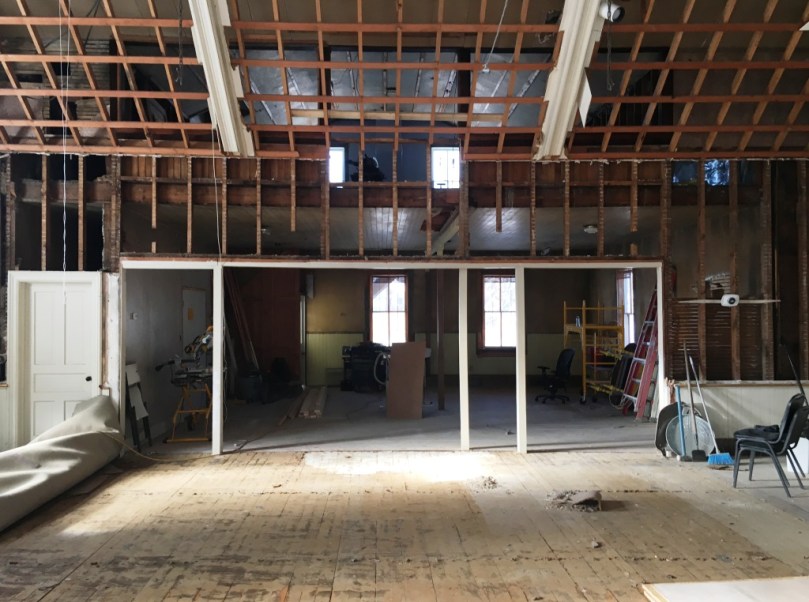
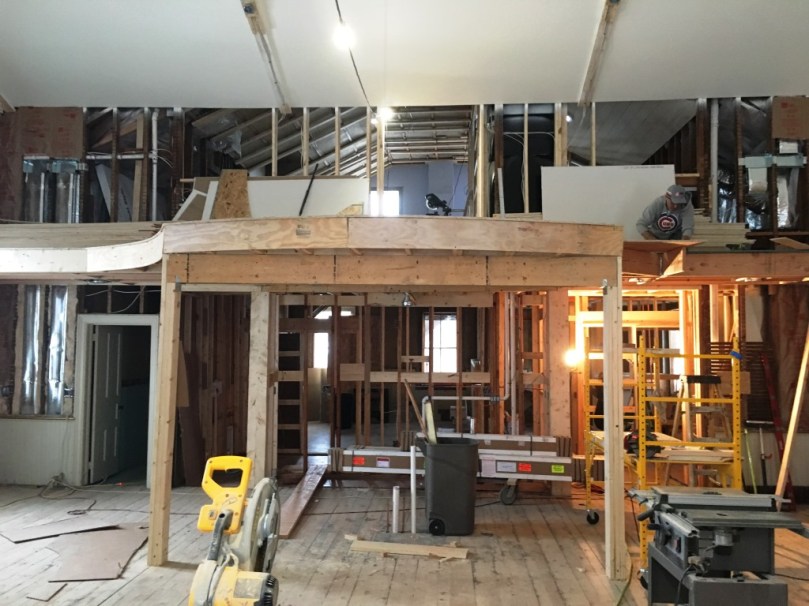
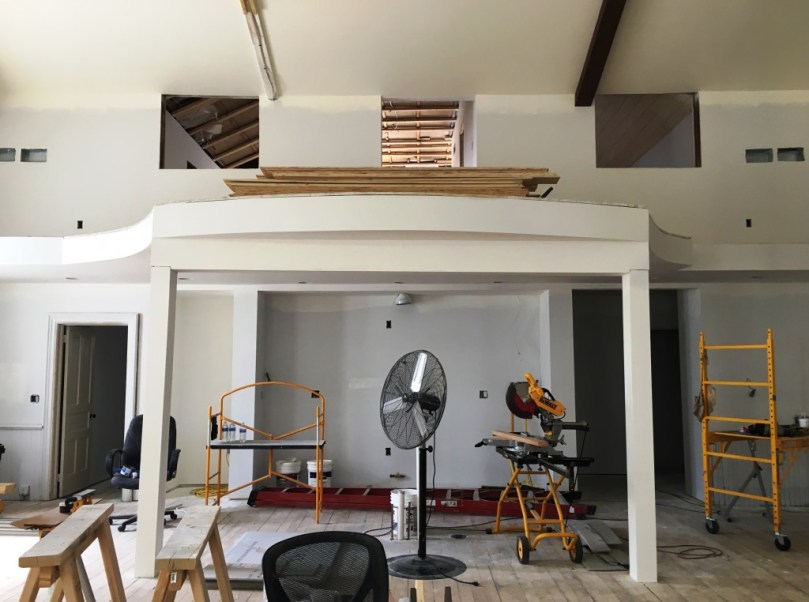
This is how what I called the “overflow area” looked when we purchased the church. The doorway on the left led to a hallway, and there was a open area and an office through the wide doorway. From day one, we envisioned the back of the kitchen in that overflow.Here is how that area looked after demolition. You can see all the way through to our future master suite; upstairs, you can see the former choir loft. The doorway on the right side would lead to the mudroom and back door.First, Tyler installed a header to shore up this wide doorway.Then he built a balcony.Tyler and You-Can-Call-Me-Al smoothed out the edges of the balcony floor.The drywallers put up Sheetrock. You can see the doorway upstairs that leads to the second floor guest room with holes for stained glass windows flanking the door.We had a railing installed on the balcony and kitchen cabinetry. All those boards in front of the kitchen are trim boards (that’s You-Can-Call-Me-Al sawing a piece of wood behind there).We installed the kitchen island and stained the great room floor.Here’s how the kitchen and balcony look now, complete with back splash, paint and furniture.
# # #
Today’s headline is a quote from 20th century Lebanese-American poet Khalil Gibran.
Dear reader, we’re taking a break from the memoir-in-progress to assess the accomplishments of the past year. My husband and I closed on the 126-year-old Methodist church just shy of a year ago, and the changes have been immense. For the next week and half or so, I’m going to tell the story in before-and-after photos. Whenever possible I’ll try to use the same perspective in the “after” shot as I did long ago in the “before.” Yesterday, we took in the new front doors. Skipping through the entryway (which isn’t finished or even semi-finished yet), we walk into what used to be the sanctuary of the church.
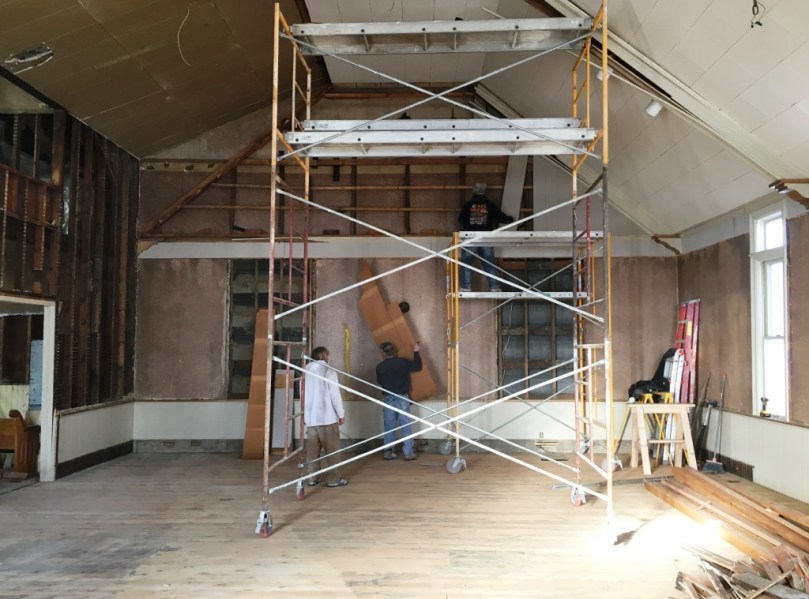
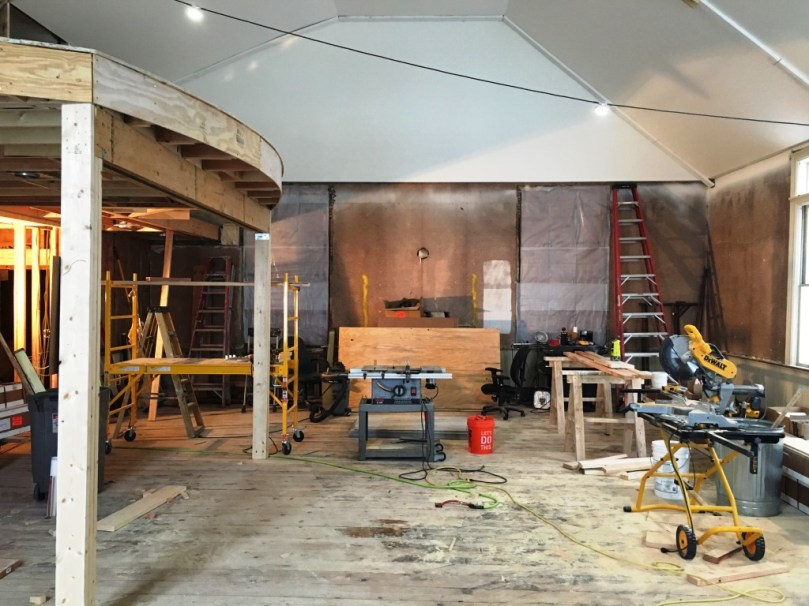
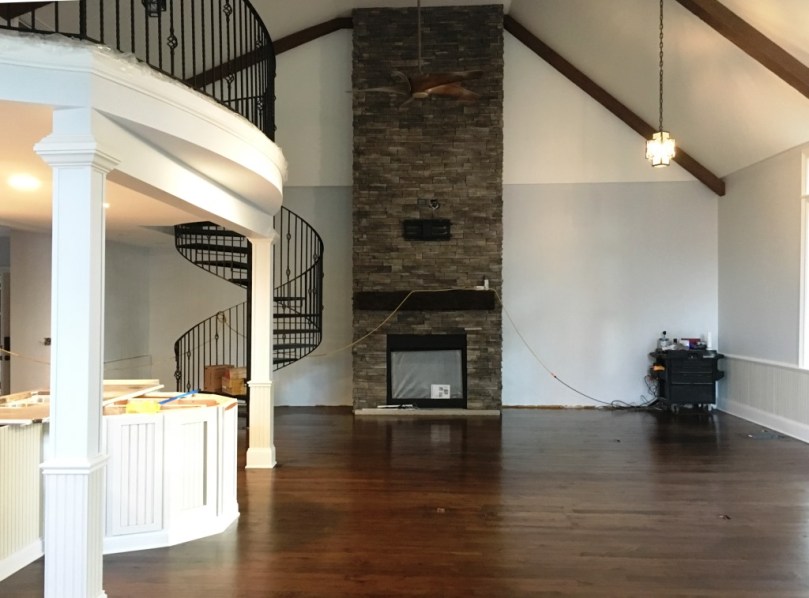
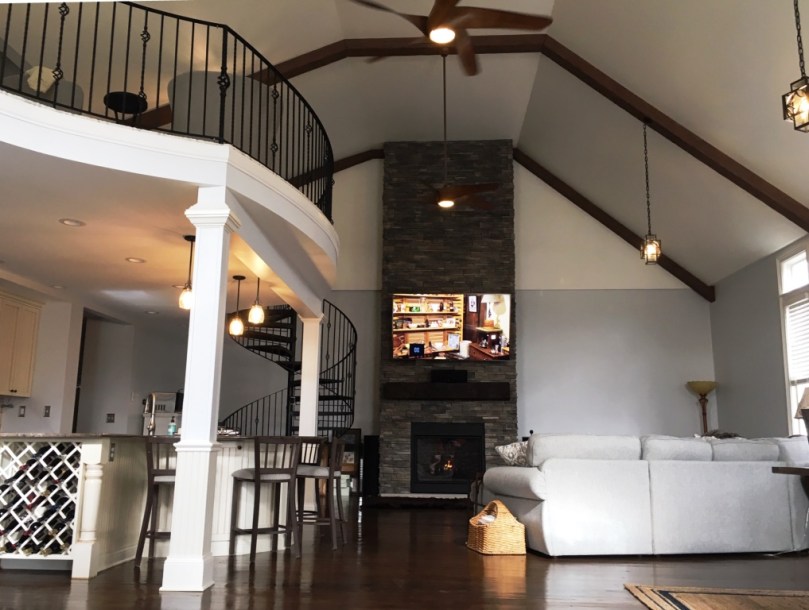
This is how the sanctuary looked when we took ownership of the church. The congregation gotten rid of or distributed all the pews and the altar.It took us two months to demolish the interior, and even then, we had the drywallers rip out the ceiling (seen here). They proceeded to drywall and paint the ceiling.Tyler built the balcony off the choir loft.The drywallers returned to install Sheetrock on the walls, and Tyler and You-Can-Call-Me-Al built the fireplace chase.Here’s how the great room looked after You-Can-Call-Me-Al bricked the fireplace and after Tyler applied the second, and correct, stain to the floor.Here’s the great room this morning. The back wall is not finished; we plan a bank of cabinets and shelving plus more seating.
Our story so far: After we moved into the old Methodist church that became our home, we entertained a few early guests without the benefit of vanity mirrors or door handles or even some doors.
# # #
Thankfully, our early guests tolerated these not-quite-finished touches. We did manage to install one finishing touch which, if it didn’t make things cozier, certainly made the guest bedroom safer: Railings.
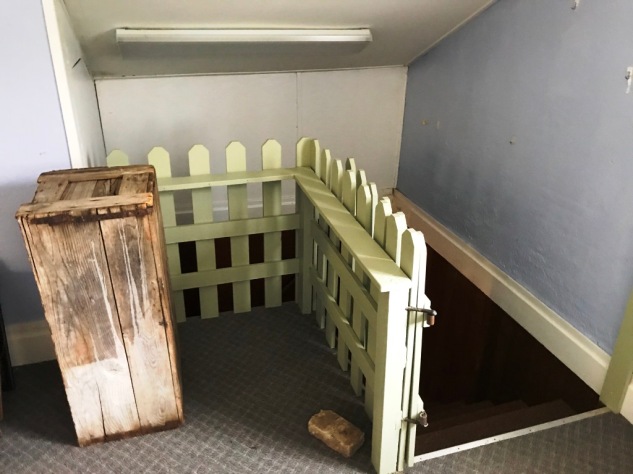
Here’s how the back stairwell looked when we took ownership of the church.
When we purchased the church, the back stair was protected with not a railing, but a picket fence. Perhaps a clever reuse of suburban nostalgia, but it was not pretty. We couldn’t get rid of it fast enough, and during construction, we navigated the back stair without any railing at all.
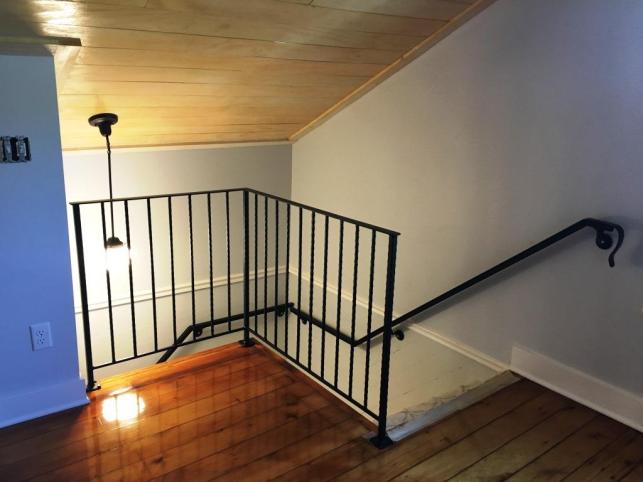
The new back railing was airy and sleek.
To replace the fence, we relied on the same fabricator who did our balcony railing. The railing in the guest room was similar but without the basket spindles. Additionally, they made a coordinating handrail, also in basic black, for the stairway.
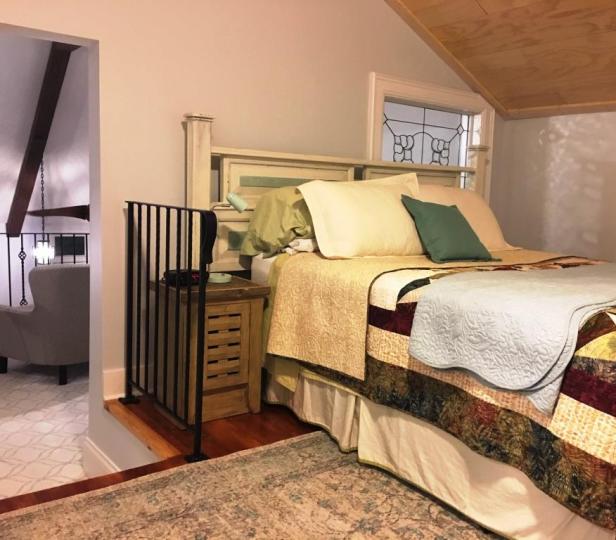
We also installed a short railing next to the two steps leading to the balcony to prevent anyone from getting out of bed and falling into the steps.
A little two-foot railing defines the two steps down onto the balcony.
Our story so far: We had come a loooong way in renovating the old Methodist church into a home, but our early guests tolerated a few inconveniences in the midst of finishing the project.
# # #
None of the bathroom doors had locks. The pocket doors on the powder room and guest bath didn’t even have handles yet. And while the toilet, shower and sink were all operational in the guest bath, the tub remained dry. We still didn’t have the proper faucet to turn the big basin into an oasis. And vanity mirrors? Oh, those were waiting for vanity lighting which was waiting for proper wiring and then cosmetic surgery to the drywall. My mother, who gamely got ready the first morning she visited without any mirrors, was inordinately grateful when I lent her the makeup mirror from the master bath (an act I should have performed sooner).
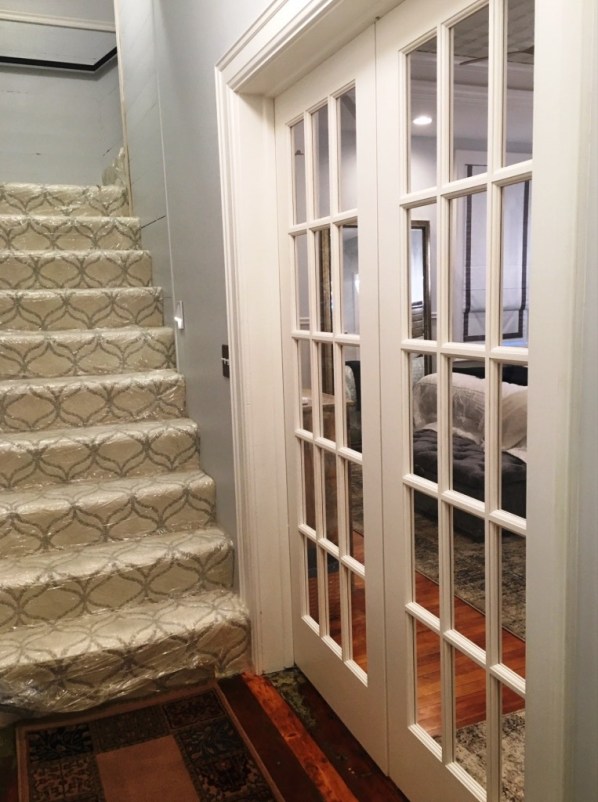
Also awkward for guests: Our beautiful French doors leading to our bedroom lacked window coverings, revealing our bed (and whoever was in it) to the hall. A guest using the back stairs walked right by these doors on their way to or from their own sleeping quarters.
The doors have panache. But not so much privacy.
# # #
Tomorrow: Little finishing touch that works. Read about it here.










 Church Sweet Home