Let’s take it from the top

Our story so far: My husband Tyler and I purchased a 126-year-old Methodist church to turn into our home. Three months in, we had completed demolition and were deep into the framing and mechanicals phase of the project.

# # #

Chapter 21

Our Number One design rule was “details matter,” and this was most important starting at the top: The ceilings. The high ceiling in the sanctuary—our future great room—was the whole reason we were interested in a church so we wanted it to look not just good but grand. This is where the finishing work began.

As soon as they had completed demo on the sanctuary ceiling, the drywallers got to work installing the product from which they derived their name: Drywall.

Drywall, for the uninitiated, is a panel made of gypsum plaster pressed between thick sheets of paper. In modern homes, drywall is rarely seen but it literally surrounds us, concealed with paint or wallpaper or paneling inside our walls and ceilings. In the 1950s, it began replacing the traditional lath and plaster as a speedier alternative. We’d removed a good deal of plaster lath from the church to expose areas where we required ducts, pipes and wiring, but on the whole we left it intact where we could because it was strong and secure. But this wasn’t the Sistine Chapel, and we weren’t creating frescos in the plaster. Our sanctuary ceiling required new drywall to replace the fiberboard tiles that were there when we bought the church.

before drywall
The sanctuary ceiling, post demo. You can see the fiberboard tiles on two-thirds of it. We just covered them up with drywall.

Drywall comes in 4-by-8-foot sheets, and the drywallers chose to get it into the church with a boom truck through the upstairs windows. One might think an eighth-inch doesn’t make any difference in most matters, but not Tyler. He chose 5/8-inch drywall for the sanctuary ceiling because it was stiffer and laid flatter. It was also heavier. At one point, Tyler’s hired man St. Johnny and I moved a few pieces out of the way, and it was like, well, like hitting a brick wall.

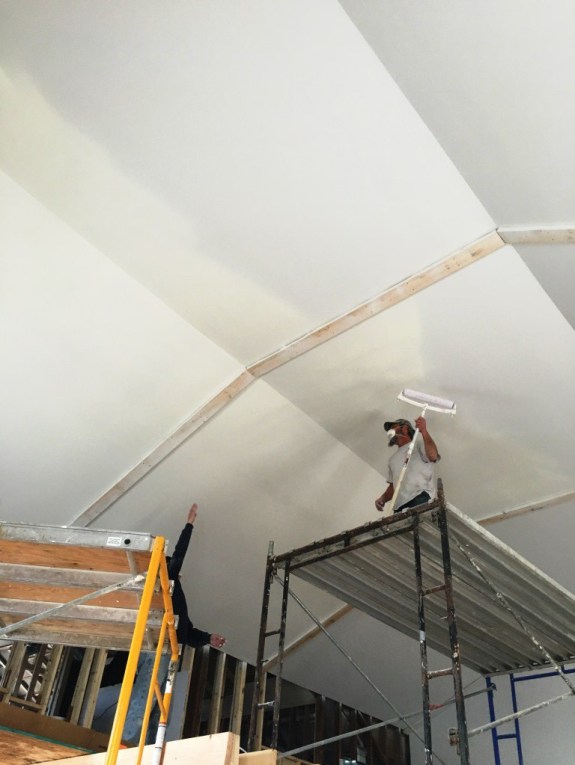
But the unwieldiness of these large sheets of drywall didn’t deter the drywall team, even as they navigated scaffolding fifteen feet high and higher. Mudding the seams came next, and in a matter of a few days, they had performed their magic.

drywall
The great room ceiling, post drywall and mudding.

# # #

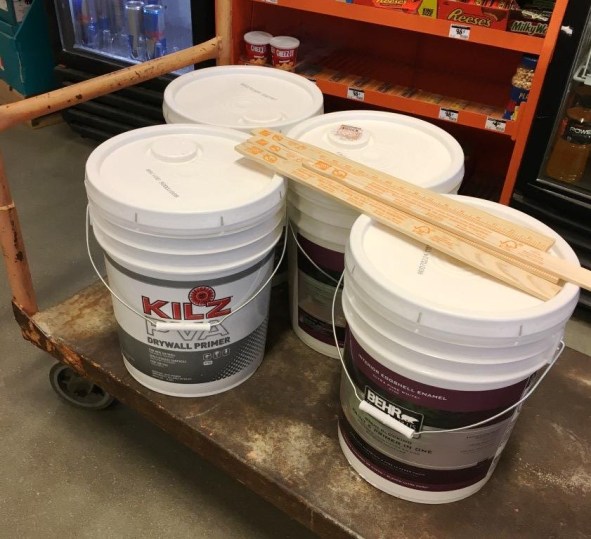
Tomorrow: How many gallons does it take to paint a church ceiling? Read about it here.

Double dip

Our story so far: While juggling other projects, we worked on the bathrooms in the 126-year-old Methodist church we were turning into our home.

# # #

Meanwhile, Tyler ordered the fiberglass shower surround and corner tub for the upstairs bathroom from two different big-box retailers (each cost roughly $1,000, which goes to show how much less were cookie-cutter options than custom ones). We needed to have these before we constructed the walls because they both were too large to get through the doorway. Fortunately when they arrived by delivery truck, the odd assortment of contractors on site at the time helped get them upstairs.

We (by “we,” I mean mostly Tyler) built the walls for the bathroom on the second floor. Like our other bathrooms, this one featured a pocket door.

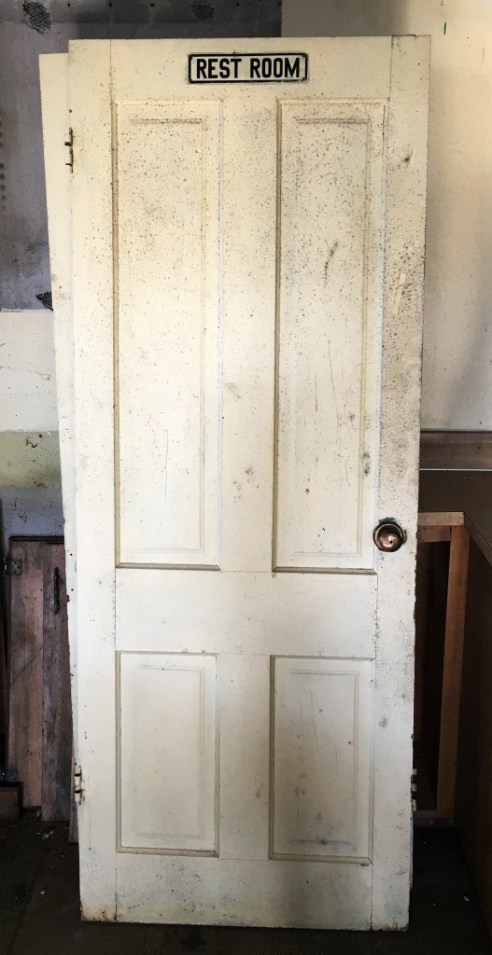
Besides the pockets provided in the form of a kit from Home Depot, these pocket doors required doors. For the second-floor bathroom and the powder room on the main floor, we were using the doors that had been on the basement bathroom and utility room. They were beautiful solid wood covered by layers of paint (and other gunk).

Rest Room Signed door
This door, formerly on the basement bathroom, would be reused as the powder room pocket door on the main floor.

Tyler tried using a non-caustic stripper, but he got nowhere with it.

So we endeavored to have them dipped. Dip stripping is when wood is placed in a large vat of solvent to help remove paint and varnish before refinishing. A nearby antiques dealer hooked us up with her dipper.

The doors were free because they came with the church. But dipping them cost $200 each.

Oof. You know that sound Skipper makes when Gilligan accidentally hits him in the gut? Yeah, that.

dipped doors
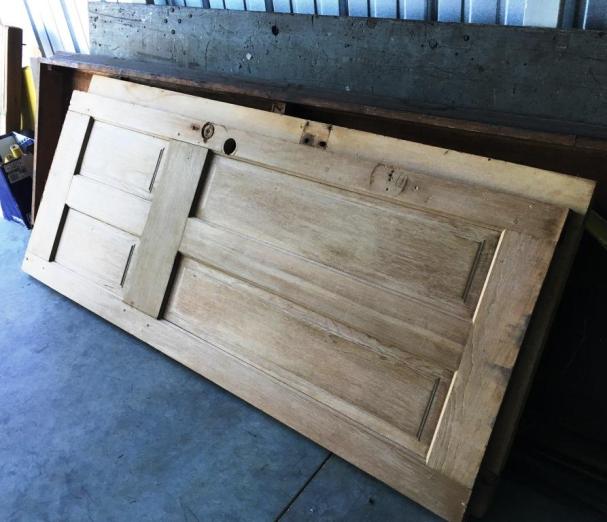
Doors, post dip.

But in any case, they turned out beautifully. All they would require is a bit of light stain and some polyurethane. And a couple of cool plates to cover the door knob holes.

# # #

Monday: Speaking of holes … Read about it here.

It’s the fixtures and fittings that finish you off

Our story so far: After much backing and forthing, we found a reasonably affordable way to construct an extra-large custom shower in our master bathroom in our church conversion, but we couldn’t put away our shopping list yet.

# # #

Ah, the fixtures.

I wanted a rainfall shower head. I naively believed that’s how they were sold: Shower head, rainfall; Quantity: One.

Um, no.

One needs valves. They’re the parts you can’t see, but if you don’t have them, you don’t have things like water pressure or temperature control. Then you need something called “valve trim.” This the knob that turns on the water.

Then you need the shower head. But sometimes you might also need a shower head arm and a shower head flange.

Naturally, each of these parts has its own price.

Oh, and you’re not done yet. Now you choose a style. And don’t forget the finish: brass, copper, bronze, chrome—oh, not so fast—would you like that in polished, brushed, matte?

bathtub faucet
Mm, pretty.

Tyler chose a distinctive Kohler bathtub faucet for the upstairs bath but we went with the “contractor special” for the shower up there. For the master bathroom, we also considered Kohler, a manufacturer based in what was now our home state of Wisconsin, but in the end we went with polished chrome Moen fixtures. I was reading everywhere that brass was new and trendy, but I hated brass; polished chrome would look clean, be durable and would make it easy to find accessories and other fixtures.

# # #

Tomorrow: Why brass is crass. And other judgy opinions from the peanut gallery. Read it here.

This porridge is too hot, this porridge is too cold but this one’s juuusssst right

Our story so far: A chance encounter led me to a tiler who was willing to take on our extra-large master bathroom shower in the old Methodist church we were turning into our home.

# # #

After a little back and forth over the course of a week or two, we agreed to provide all the materials per You-Can-Call-Me-Al’s specs, and he would perform the work to be paid by the hour.

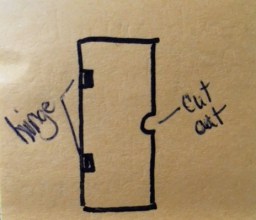
This meant we would have to buy a custom glass door and have it installed. Which meant visiting with another contractor. One lead led to another, but after I defined my wishes with a glass expert, he sent me a quote. Besides the door, another half wall was included which was more affordable than two glass walls but still lux.

shower door sketch
Top-notch graphics.

In the middle of these negotiations, we saw a “Fixer Upper” episode in which the shower door had a cut-out in the glass instead of the handle. Very trendy. I inquired about this, and by gum, the glass expert could do such a thing. For a price, of course.

In the end, we’d have nearly exactly the master shower we’d envisioned: Extra-large and airy.

The only do-it-yourself part would be the shopping.

You-Can-Call-Me-Al suggested buying tile at a Big Box store because if he ran short, it would be easy to get more. If, on the other hand, we found something special-order from Spain, well, then we might have problems.

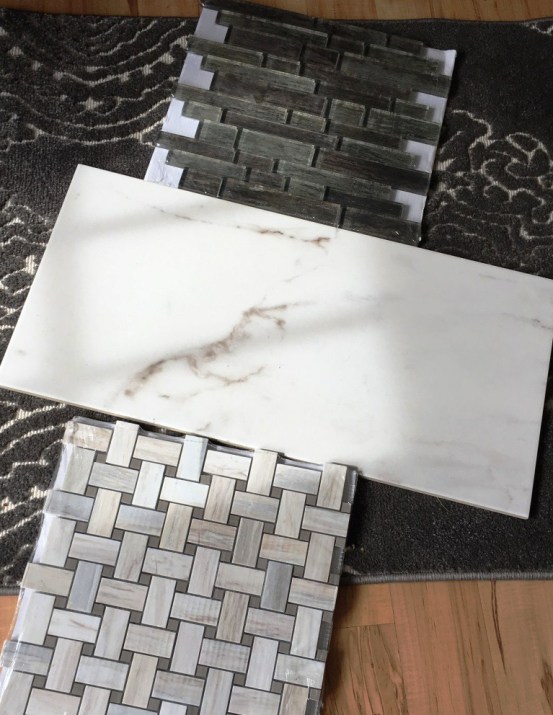
So I went to Home Depot (again) and made like Christina El Moussa from “Flip or Flop.” I juggled samples on the floor of the store and settled on three: One for the floor of the shower, one for the walls, and one as ribbon accent. I bought one of each and brought them home to the rental house to sell the salesman on them. He was no Tarek, but then he had no reason to gripe—let’s be honest, I choose options available at a Big Box store—Tyler agreed to my vision.

tile choices
This is definitely one project I can’t wait to see finished. From top: accent ribbon, wall tile, floor tile.

All told, our extra-large master shower would cost us about $7,000. Plus plumbing and fixtures.

# # #

Tomorrow: Ah, the fixtures. Like everything else in a home remodeling project, the choices can overwhelm. Read about it here.

Sweet serendipity

Our story so far: We had established we weren’t willing to tile our own shower in the old church we were renovating into our home, but we were going to take a bath on the project if we accepted some of the stratospheric contractors’ quotes we received.

# # #

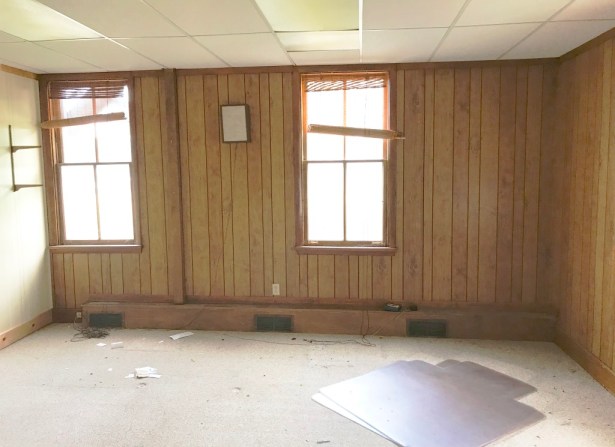
before shower area
This is the room in the church–prior to demolition–where we planned to put our master bathroom. The corner on the right is where the shower was planned.

Then I experienced another one of those moments of serendipity that had been blessing us throughout this project.

I went to the post office to ask about whether we were the getting a mail box or post office box. I had already been there four times and had left without a clear answer.

As I was about to step into line, the man who held open the door for me motioned to let me in line before him.

“No, go ahead,” I said.

But he was a gentleman of the generation when etiquette demanded ladies first (let’s be honest, he looked to be my age). I accepted his offer.

I explained my problem to the man behind the counter, beginning with this description that had become familiar to my lips: “I bought the old Methodist church, and we’re turning it into our home.” Etc, etc.

During a pause in our conversation, the gentleman behind me asked, “You’re remodeling a church?”

“Yup, we are.” I smiled.

“Do you need any help?” he asked.

“Yes! You know anyone?”

“Yeah, me,” he said. “I’m a master carpenter. And I do other things.”

“Do you know any tilers?”

“Yes, I do tiling.”

“Do you have a card?”

He fished a card out of his pocket. By now I was ignoring the postal employee. I read the card, and an old Paul Simon song floated into my head.

“Al? Can I call you Al? Do you have time now? My husband is at the church. He handles all the contractors. You could go talk to him now.”

“Sure,” You-Can-Call-Me-Al said. “Where’s the church?”

And the polite gentleman went to the church, introduced himself to Tyler—You-Can-Call-Me-Al—and told him, yes, he could tile a shower for us, he did it all the time.

Meanwhile, I nailed down an answer on about our mail: We would be getting a box at the post office, not a mailbox.

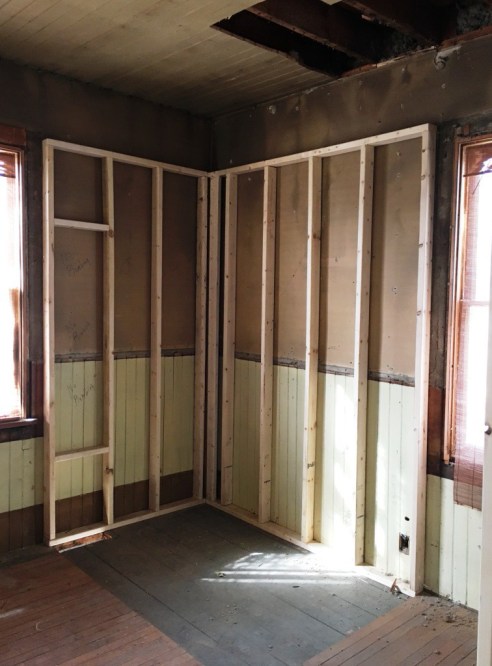
shower roughed in
This is the master shower area studded in.

# # #

Tomorrow: We piece things together. Read about it here.

If at first you don’t succeed, try, try again

Our story so far: In the midst of the framing and mechanicals phase of renovating the 126-year-old church into our home, we tackled showers. And it was like having a cold shower—a real wake-up call. The first quote was a doozy.

# # #

We would have to make some compromises. We started by eliminating custom showers on the second-floor and in the basement; we could go with fiberglass surrounds for those showers—only our guests would be using them anyway. We also relegated the basement shower to Phase Eight when we tackled that level; we needed to get the main floor habitable first.

So Tyler went back to the acrylic shower guy and got a quote on the master bathroom shower only: Still $8,728 plus plumbing and fixtures.

Uff-da.

We had two insurmountable hurdles for this shower. It was extra-large so we couldn’t go with a standard insert. And we wanted to maintain an openness in the bathroom that demanded two glass walls. “Extra large” and especially “extra large glass” were pricey.

OK, let’s get another quote, this time for tile. We approached a well-known area remodeler who sent a knowledgeable and efficient estimator to the church. He asked informed questions, performed detailed measurements amidst our dusty church and returned a professional, detailed quote: $12,500. Plus fixtures and plumbing.

Oh, boy.

Well, unless we left out a toilet and sinks, such a beautiful shower was still more than we budgeted for a master bath in the Tequila Budget.

This was a problem.

While shopping for cabinets elsewhere in the church, Tyler spied a do-it-yourself shower option that wouldn’t require us to tile. The material for the shower walls came in full sheets that could be cut to size.

Price for this do-it-yourself option? $7,414 plus plumbing and fixtures.

Well, we were getting warmer, I guess.

# # #

Tomorrow: Serendipity in the form of a gentleman pays us a visit. Read about it here.

The price of beauty

Our story so far: In the midst of the framing and mechanicals phase of renovating the 126-year-old church into our home, we were called upon to make some decisions about the bathrooms.

# # #

Chapter 20

Showers, as it turns out, are expensive. And we planned to have three of them in the church, one on every floor.

Even while discussing the Tequila Budget, we agreed we weren’t going to be tiling our own showers. Oh, we were happy to do demolition, sand the wood floors, install our own kitchen cabinets, but tiling? Forget it.

tile job
Not the worst tile job. But not the funnest project either.

Tyler and I had attempted a tiling project in our former home, replacing the carpeting (yuck!) in the master bathroom. It turned out OK, but it was difficult work and perfect corners were tricky to accomplish. Perhaps ironically, Tyler was not a tiler. For the church, we knew we wanted an expert to handle the tiling.

Then we saw acrylic showers at a home show, and we were intrigued. No seams to leak, easy to clean and long-lasting. But when we got the quote on the showers—$19,050 plus plumbing and fixtures for all three—we learned they cost as much or more than tiling. The bottom line forced us to confront our means and the end: How much was beauty worth?

# # #

Tomorrow: We explore other options. Read about them here.

Closing one door, opening another

Our story so far: Consumed with all things related to HVAC, plumbing and electrical, we were deep into the mechanicals phase of renovating the 126-year-old Methodist church we hoped to turn into our dream home.

# # #

Chapter 19

Few people go through life without hearing the old maxim, “When God closes a door, he always opens a window.” It’s the line a friend uses to impart hope in the face of loss, which appears on the scene in every life occasionally.

front entry on the outs
Entry on the outs

This was the case in the old Methodist church, too, literally if not metaphorically. We were going to seal off one of the doorways. Instead of opening a window, though, we were creating a new doorway.

The doorway on the outs was the side entry to the main floor. While we were keeping the exterior entrance which opened to the basement, the three steps up into the main floor were going to become part of our master bedroom which allowed us to incorporate another window into the boudoir. Tyler would have to weave in a new oak floor over the steps, but we salvaged flooring from the other side of the room where we were installing the master shower. When he poked around into the stairway above the departing entrance, he discovered where the stair stringer was cracked, which explained why that stairway was uneven. It would have to be replaced in the reconstruction process.

coat hooks
Can you see the screw holes from the coat hooks? They look like little faces.

Just inside that entrance, one could see a peculiar row of nail holes in the beadboard. It didn’t take much imagination to realize those holes were for coat hooks, where generations of Sunday School kids probably hung their jackets. I hoped to keep that beadboard and add more along the new wall where the door was removed; I weighed whether to use of wood putty in the holes or keep that little tribute to what the room used to be.

back entry in outline
Imagine a doorway here, one that will someday lead to Tyler’s mancave.

Meanwhile, we were going to build a door in the north wall of the church to the garage in an area Tyler called the mudroom. But since it was February, and the garage wasn’t going to be built for months, this door would be just a little spray paint and imagination for a while.

# # #

Tomorrow: As in our renovation project, February brought closing and opening doors in real life, too. Read about it here.

Trading one crack for nine

Our story so far: Among the finds we made while shopping to outfit the old Methodist church we were turning into a home was a pair of leaded glass windows to decorate the interior balcony.

# # #

Meanwhile, Tyler found another set of leaded glass windows on eBay. Unfortunately, they didn’t survive transport; they arrived in the open package Brown left on our doorstep.

cracked etched transom
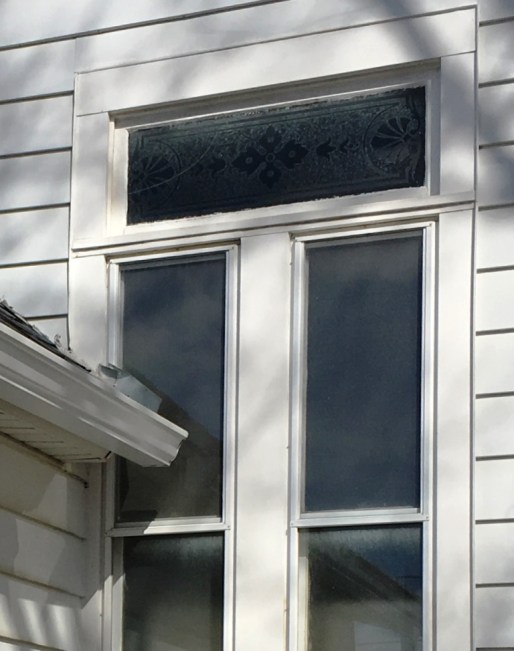
Our church did not have stained glass windows, but the transoms in the sanctuary were etched glass. This one, however, was cracked.
broken leaded glass
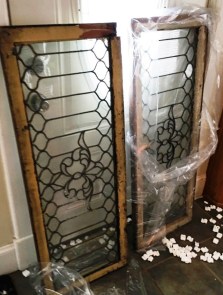
The leaded glass windows we had hoped to use as replacements to two of the etched glass transoms arrived broken.

The second set of leaded glass windows were intended to replace the etched glass transoms on the front of the church. One of those windows had a crack in it. The eBay windows were exactly the right dimensions and, coincidentally, they were salvaged from a church in Michigan twenty years ago. The seller never put them to use so she put them on auction. Tyler secured a great deal and we paid $118 to have them shipped and insured, but we kicked ourselves for not driving to Michigan to pick them up ourselves. When they arrived on our front doorstep, nine panes in the two windows were cracked.

We had them insured, but Brown insisted on collecting the windows before paying the insurance. What? To throw them away? We wanted the insurance to pay for repairs.

After wrangling with Brown via email, the shipping behemoth agreed to let us keep the windows and send us a check. Now we had to find an artisan to make repairs on a pair of decades-old windows.

Which we added to our long to-do list. But we had another open window distracting us.

# # #

Coming up: Chapter 19 opens with the truth of a maxim. Read about it here.

Window shopping

Our story so far: From fans to faucets, we were accumulating pieces and parts to install in the old Methodist church we were turning into a home.

# # #

One Saturday while junking, we found a pair of leaded glass windows we couldn’t do without. Every other antique store we’d happened across sold stained glass windows in all kinds of strange rectangles, decorated with gaudy oranges and red glass, and almost always as singles. Nothing was quite right.

balcony projection
Here’s an illustration of how the balcony might look when we’re done.

We were looking for a matched pair we could install on either side of the balcony doorway. In this way, they would be interior windows and we wouldn’t have to worry about weather-proofing leaded glass. The windows would add decoration to the balcony wall while adding natural light from the second story to the sanctuary.

leaded glass for balcony
Our windows were on display in the shop window.

“Our” windows were on display in an a well-curated antique shop less than ten miles from the church. The leaded glass seemed so much classier to me than so many stained glass windows we had seen; they fit our aesthetic perfectly.

The next weekend, Tyler built a frame for transport from waste lumber accumulated at the church. When we picked up the windows, he sealed the custom-built frame on the sidewalk in front of the store, and then we added them to our collection in the rental unit to await installation with so many other pieces we had collected.

# # #

Tomorrow: Chapter 18 closes with a pair of windows that didn’t travel as well. Read about them here.