This little light of mine

Our story so far: Who needs duct tape when one has spray paint? I made use of it to rejuvenate a set of crystal chandeliers for use in the old Methodist church we were turning into our dream house.

# # #

I also employed spray paint to bring another set of light fixtures into my rustic transitional design scheme.

The lights we chose to hang in the sanctuary, our new great room, would feel right at home because they had hung there in the past, illuminating church services, baptisms and weddings for a least a decade, maybe a generation or two.

sanctuary light before
Sanctuary light fixtures before.

The former pastor had purchased the light fixtures when the congregation moved out sixteen months before we bought the church. She told us one of the members had donated them, so they had sentimental value. When she met us, she offered to sell them back to us for a song, to which we readily assented once we saw them. The design was a nice union of traditional and modern with a hint of religiosity but without overt evangelism. The cross on all four sides of the square fixture was a curved geometric design. Both Tyler and I were honored we could recycle these light fixtures and hang them where they were meant to be.

They needed a little work, and I was the right woman for the job.

spray paint zone
I used old electrical conduit to hang fixtures in my spray paint zone in the basement.

I disassembled them, sanded the surfaces, spray painted them hammered black (I tried a few parts in hammered bronze and rejected the two-tone look) and then hauled them all to the glass expert—the same one who would be installing our glass shower door at some point—to replace the dingy shades with seeded glass. They sparkled when he was done.

Now an associate of the Lighting Savant was employed to rewire them, and weave the wiring through the chains from which they would hang from the ceiling. These chains had been left empty and dangling from the ceiling when we took over. More than one member of the peanut gallery observed they were heavy enough to pull a car. Well, we were “building solidly” per our mission statement, weren’t we? These light fixtures would never fall down! Two of the chains were shortened considerably as the lights would be hanging over the balcony.

chains in situ
In this picture before we actually purchased the church, you can see the lonely chains hanging pointlessly in the sanctuary.

More than any other light fixtures, these chandeliers excited me. I could hardly wait for the day we would hang them from the beams in the sanctuary.

sanctuary-light-after.jpg
Great room lights after.

# # #

Tomorrow: Lights for the hall of history as Chapter 22 concludes. Read it here.


Good things come to those who wait

Our story so far: We invested in a number of new light fixtures for the old Methodist church we were turning into our home, but we also had big plans for some used ones.

# # #

spider chandeliers
These only thing these light fixtures were speaking to me was “I’m ugly.”

During demolition, I ran across a quartet of ugly, spider-like lighting fixtures. They were ugly to me because I disliked brass (if you’re a fan of brass fixtures, we’ll just have to agree to disagree; I’d heard brass fixtures were coming back, but that was just one trend I couldn’t endorse). I was so close to getting rid of them, I relegated these fixtures to the donate pile. Tyler stopped me. I didn’t understand why at the time, but he obviously saw something in them I couldn’t see.

Also during those early days of clean-up, I ran across a couple of banker’s boxes full of plastic crystals. I thought they might be Christmas decorations; perhaps they somehow hung on a Christmas tree like icicles. I packed them away with the intention of figuring out how to use them later.

Then, more recently, as we discussed how to run electrical wiring, Tyler and I browsed the lighting displays at a couple of big box stores. We were trying to determine which rooms would have can lighting, where we might put sconces, whether to put light kits on the ceiling fans. The electrician would need to know these nuances when he ran wiring through our ceilings and walls.

While in the lighting department, I was inexplicably drawn to the crystal chandeliers.

This was me being stupid. We didn’t have a ballroom in the church, and I didn’t spend a lot of time in floor-length gowns ordering around the servants. “Chandelier” wasn’t in the rustic transitional design plan.

But. Chandeliers are so lovely! Ethereal even. Evocative of heaven. Fit right into a church!

rustic chandelier
The very definition of rustic chandelier.

(I can justify anything.)

I began thinking I could maybe use those Christmas icicles I found in some sort of chicken cage or tin can to create a rustic chandelier (you’ve heard that definition of creativity that suggests putting two opposite things together in a new way? A tin can chandelier would be the dictionary picture for that).

I actually found a modern light fixture like this at Menards, so I’m not delusional. It’s a thing.

But before making this Frankenstein light fixture, I tried using my icicles on the brass light fixtures I found and almost gave away. Couldn’t hurt to try, I thought.

chandelier assembled
Check it out. Brass and plastic, transformed!

Poof! Magic happened! The crystals were made for the light fixtures. Whodathunkit? (You knew this was coming, right?) Beautiful! Two of them would be offer perfect lighting for the night stands in our bedroom.

OK, they were still brass, but I could remedy that.

Ever hear of spray paint? It’s magic, too. A few years back, Tyler and I turned sofa legs into the coolest curtain rod ends with spray paint (read about it here; it’s worth checking out just for the before-and-after shots).

# # #

Tomorrow: Great light fixtures for a great room. Read about them here.

What’s vanity without good lighting?

Our story so far: While shopping for light fixtures for the old Methodist church we were turning into our home, I met the owner of a nearby lighting showroom who described himself as a “lighting savant.”

# # #

While I could have chosen the exact same lights for all the bathrooms, I decided instead to customize each to the space. This wasn’t a hotel we were outfitting after all.

powder room lights
The display lights had a polished chrome finish, but the ones I ordered were in brushed nickel to match the faucet.

The first lights that caught my eye in the Lighting Savant’s showroom were the ones I chose for the powder room—the big, clear glass bells were distinctive without calling undo attention to themselves.

master vanity lights
This image from Pinterest inspired the master bath lighting choice.

For the master bath, I wanted narrow up-and-down lights in polished chrome to install between the three arched mirrors I planned above each sink and the make-up area. (Well, to be fair, what I really wanted was lighted, mirrored medicine cabinets, but that idea was shelved when I looked up the prices. Still, these were the most expensive light fixtures of all the new ones in which we invested.)

upstairs bath lighting
For the upstairs bath.

Upstairs, I planned a full-on farmhouse feel, and this was the bathroom where I planned to paint a pair of old dressers for the vanity. The vanity lights I chose were country-inspired glass in industrial polished chrome. The result had a dash of the nautical.

My new lights would be delivered in two to four weeks. Now I devoted my attention to recycling some of the light fixtures we found in the church. At first glance, some had more potential than others.

# # #

Tomorrow: Chandeliers? Really? Read about it here.
If Rain Man was into interior decorating

Our story so far: To aid the electrician in wiring the old Methodist church we were turning into our home, I got busy choosing light fixtures.

# # #

Lighting is the type of detail one only notices when one is paying attention. Suddenly, I was in the market for light fixtures, and I realized most lighting is so boring. But when I saw something interesting, well, it deserved to be admired. More than once while Tyler shopped in the building supplies department of a big box retailer, I would wander the aisles of the lighting department gazing up at all the flamboyant options until I got a kink in my neck.

Some of our light fixtures would be of the recycle-reuse-repurpose variety, but we still needed a few new ones.

One day, we stopped at a nearby lighting store. All light fixtures, all the time. The knowledgeable salesman (and owner, I found out later) showed off trendy options, affordable options and distinctive options plus all the options we could get in every option: More sockets? A different finish? Bigger? And look at how different lightbulbs change the look of a fixture! When he didn’t have the actual light fixture to show me, he pulled out inches-thick catalogs with more looks.

I marveled at his command of the vast inventory.

“I’m a bit of a lighting savant,” he said sheepishly.

I was paralyzed with too many options. He directed me to his website, where I found more options. But there I could do searches by type, size and finish. Still, I couldn’t pull the trigger until consulting with the Lighting Savant, so I made an appointment back at the store where he shepherded me to what I finally decided were the right options.

10514-ROB
The bulbs I chose look more like round bulbs than like candle flames. Who do you think you’re fooling? Fire is so Neanderthal.

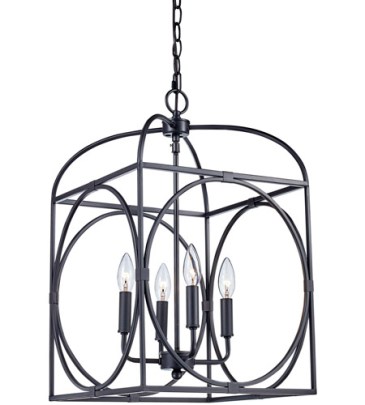
For the front entryway, I chose a big, airy chandelier of which Joanna Gaines of “Fixer Upper” would be proud.

kitchen pendant

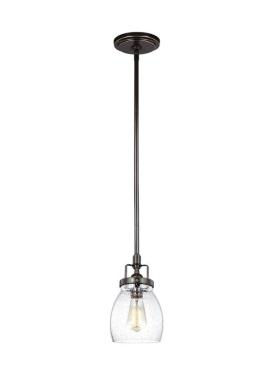
For the kitchen island, I found a trio of vintage industrial pendants with seeded glass.

# # #

Tomorrow: And for the bathroom vanities? See what we chose here.

First light impression

Our story so far: As the electrician wired the old church we were turning into our home, we selected light fixtures.

# # #

former exterior lights
The existing exterior light fixtures were hardly worth mentioning.

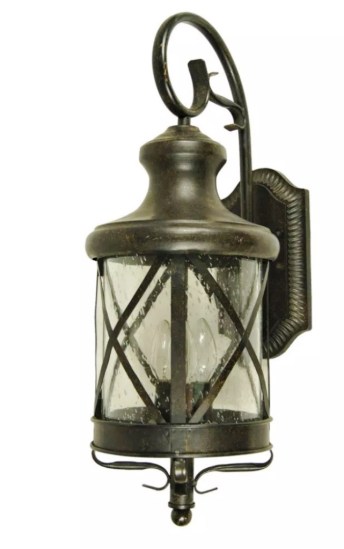
The first light fixtures a guest would see upon visiting our new home would be the exterior lights. The existing lights were functional but sadly plain. And too small for my taste. The new lights would frame the castle doors, so we chose contemporary castle mash-up stylistically, and Tyler found a matching set on eBay.

The fixture included seeded glass, which roughed up the design just enough to qualify as rustic. We would employ this strategy on other light fixtures inside the house, too.

In another delivery snafu, one of the light boxes arrived with a distinctive rattle. The round glass—impossible to replace—was a pile of shards in the bottom of the box. Fortunately, the seller offered a quick refund and Tyler bought another immediately. Like our other finds, the lights went to the ever more crowded storage unit.

exterior light
Castle meet contemporary.

# # #

Tomorrow: Lighting for the entryway. Read it here.

Sometimes you have to fight through darkness to get to the light

Our story so far: In the mechanicals phase of renovating the old Methodist church into a home, we employed the services of an electrician. But he required direction in order to do his work.

# # #

From an interior decorating standpoint, Tyler and I could agree on many things. I approved of his choice of the shape he chose for the balcony, and he approved of my ideas for a tile rug in front of the kitchen sink. We chose our great room sectional, the kitchen cabinets and the bathroom layout together, so we were simpatico.

The one thing we could not agree on was lighting.

It wasn’t even light fixtures we argued about—it was the very existence of lighting!

Tyler liked subdued, indirect lighting in all circumstances.

I liked direct, high-wattage lighting in most circumstances.

I attributed this to our eye color. He had blue eyes, and mine were brown. I thought his eyes let in more light than mine. But our preferences also might have been related to our leisure habits. He liked to nap. I liked to read. These activities required different kinds of lighting.

In any case, we needed to find ways around this profoundly different lighting philosophy. In many cases, we chose dimmable lights. In other cases, I simply lost the battle.

The sanctuary lighting, for example. I would have installed recessed can lights throughout. Instead, I got none.

As easy as it was to choose an electrician, our differing lighting styles made it hard to give him direction. This resulted in our first real fight about the church. I couldn’t believe I had to describe exactly how many and where the can lights in the kitchen would be. And Tyler couldn’t believe I didn’t realize this.

I hated the pressure of these decisions. I had to think about how we would be using each room, what appliances we’d use, how I was going to situate the furniture (and the lamps) and whether the ceiling light would hug the ceiling or be a pendant.

mudroom Electrical
Here’s one of the maps I created to guide our electrical choices.

After negotiating with Tyler, I ended up creating electrical maps of every room. I was the only one who consulted them, but at least I could direct the electrician (who wrote notes in Sharpie pen on the wall studs).


# # #

Tomorrow: First impressions matter. Read about it here.

All power corrupts, but we need the electricity

Our story so far: My husband Tyler and I purchased a 126-year-old Methodist church to turn into our home, we demolished the interior over the course of two months, and now we were in the midst of the mechanicals phase of reconstruction.

# # #

Chapter 22

Benjamin Franklin may have proved lightning was electrical by flying a kite in a thunderstorm in 1752, but it wasn’t until 1879 that Thomas Edison invented the electric light bulb.

Twelve years later, our Methodist church was built. It surely was not lit with electricity until at least the 1930s when President Franklin D. Roosevelt created the national electrical grid to bring electricity to rural areas.

Perhaps the church was lighted with gas at some point, we couldn’t tell. We found evidence of early 20th century knob-and-tube wiring and cloth-covered wiring behind some of the walls in the church, but none of it was operational, and the remaining wiring was a mix of flexible armored tube copper wire, Romex and a little conduit.

What wiring was operational was flaky. Tyler learned this when he connected uncounted power tools to various outlets. The dependable outlets soon were favored and extension cords employed when electricity was needed in far-flung church locales.

To be safe, Tyler decided to rewire 100 percent of the church, no matter how old or new(ish) were the wires. Our electrician was the first contractor we chose; he’d worked on the church in the past so he already knew what was wrong in a contemporary way and what was antique in a knob-and-tube way. By the time the HVAC guys finally finished and Glimfeather the plumber was nearly done, our walls were framed. So our electrician could go to work.

Of course, in order to get to work, the electrician needed direction. Where to put outlets? Where to switch the lights? What kind of lights? How many?

Welcome to a world of arcane terminology like amps and volts, poles and pucks, cables and circuits, cans and dimmers, GFI and GFCI.

# # #

Tomorrow: Our first real fight about the church. Read about it here.

Your hat should match your dress

Our story so far: Reroofer, who once helped us repair the belfry, was enlisted to blow insulation into the roof of the 126-year-old Methodist church we were turning into our home.

# # #

But Reroofer, our agile roof walker, wasn’t finished yet. With an uncharacteristic daytime handoff from Glimfeather the plumber, Reroofer threaded the soil vent pipe through the roof and proceeded to repair the hole in the roof created when we removed the portable gas heater (and accompanying stove-pipe) from the second floor.

reroofer soil pipe
Reroofer, happy to be outside on the roof instead of inside spraying insulation.

A soil vent pipe, for people who only use bathrooms but don’t know how they work, has nothing to do with soil. It runs vertically from the underground drainage system to the roof. The vent allows odors from waste to be released into the atmosphere. By placing it above roof gutter level, no one’s the wiser about the stink of your, shall we say, poop.

For what wouldn’t be the first time, Tyler sent Reroofer up there with a can of black spray paint. I don’t have to remind you that details matter, and who wants a white pipe sticking out of the roof when one could have a black pipe. Not Tyler, the Virgo, who had already spray-painted the exterior vents for the dryer and stove white to match the siding.

Reroofer’s work was impeccable; when he was done, the roof looked as good as new.

HVAC guy on roof
An HVAC guy, complying with Tyler’s wishes.

A week or so later, the HVAC guys threaded a flue vent liner through the chimney in preparation for the fireplace we were installing in the sanctuary-cum-great room. Before ascending the ladder to straddle the highest peak on the roof, Tyler handed the appointed HVAC guy a can of heat-resistant black spray paint with explicit directions to paint the vent at the top of the chimney.

“What did the HVAC guy say?” I asked later.

Tyler said, “I think he was surprised I had heat-proof black spray paint on hand.”

# # #

Tomorrow: Chapter 22 opens, and the air is electric. Read it here.

Pink isn’t just a color

Our story so far: While the plumber, electrician and HVAC guys worked on the old Methodist church we were turning into our home, so did we.

# # #

A week or so later, Tyler loomed over the bed at 5:50 a.m. on a Saturday. “Home Depot opens in ten minutes. Time to get out of bed!”

Did I mention Tyler was an early riser?

I complied. Fortunately, Starbucks was on the way to Home Depot and Tyler deigned to stop. So at least I got some coffee.

We proceeded to Home Depot where I watched him walk the insulation aisle, checking packages.

“This is the one! Grab that cart.”

We took only one pink loaf of blow-in insulation back to the tool rental desk.

“How many packages come on a pallet?”

“Eighteen.”

“I’ll take two pallets.”

No kidding. That earned us the bulk discount, but we still invested four figures in insulation.

insulation pallet
Insulation pallet Number One.

Two pallets of insulation did not both fit into the back of the truck. So I drove one pallet back to the church and went right back to Home Depot for the second one.

Just about the time Tyler had cut all thirty-six loaves of insulation in half in our front yard, Reroofer arrived.

Reroofer, the trusty roof expert who worked on our belfry, didn’t know he was going to be helping with insulation, but he was game for anything (apparently he had had his coffee, too).

insulation yard
That’s a lot of insulation.

The assembly line began. Reroofer climbed into the space between the sanctuary ceiling and roof with one end of the hose, while I fed insulation a half loaf at a time into the blower outside the front door. Tyler supervised (more than once he reassured me that Reroofer was upright and ambulatory inside the attic rather than being buried by a mound of pink insulation—“He’s fine! Now get back out there and mind the blower!”).

pink panther
This was me, feeding insulation into the blower. Yes, I wore my pink work boots and a sly look on my face.

I found the job strangely satisfying. As the blower consumed half-loaf after half-loaf, the enormous pile of pink insulation slowly but consistently disappeared.

Four hours later, plus or minus a couple of breaks, we were done.

Or at least I was.

I went home to shower.

# # #

Tomorrow: Not everyone hit the showers. Reroofer wasn’t done yet as Chapter 21 concludes. Read it here.

Insulation against glamour

Our story so far: We worked on ceilings ad infinitum during the renovation of the 126-year-old Methodist church. 

# # #

Before sealing up ceilings and walls, I got to install insulation.

The pink stuff.

This job required no expertise, only perseverance. So I got tagged.

I suited up in Tyvek, safety goggles, gloves and a breathing mask, and set to work on the first area requiring insulation: The attic eaves.

It was like wrestling with Tyler if my king-sized husband were cotton candy—the insulation was bigger that I was, and there was no way I was gonna win this fight. I resisted, I poked and I punched when called for, and eventually I got the pink rolls stuffed between the studs.

The worst part was the height of the attic eaves—exactly short enough that I couldn’t stand and tall enough that I couldn’t reach the top when I was kneeling. I didn’t have quadriceps for this.

After wrestling with insulation for two days and thinking I was finished, I learned properly installed insulation requires a vapor barrier. So I spent an afternoon wrestling with plastic to cover the insulation and a staple gun (one of the few power tools I was comfortable operating).

When I finished, I was reminded of a mantra that circulated in the scrapbooking circles I once traveled. Scrapbookers rarely lack raw material because life and the photos one takes while living life keep happening. It can become overwhelming if one agonizes about every single detail on every single page so sometimes scrapbookers power through an imperfectly decorated scrapbook page just to be able to move on to the next one: Done is better than perfect.

attic eave before
This is a shot of the attic when we bought the church. The door to the eaves had a sign that said “do not open.” We opened it anyway, and the eaves were filled with junk and dust.
insulated attic eave
After: Is this the finest insulated attic eave you’ve ever seen?

# # #

Tomorrow: Oh, we’re not done with insulation yet, missy! Nosirree! Da-dum, da-dum, da-dum da-dum da-dum, da-dum da-dummmmm. Can you hear that saxophone? Read about it here.