Give us the tools, and we will finish the job

Our story so far: We struck a deal for a pair of antique safes we could repurpose as night stands in the master bedroom of the old church we were turning into our dream home.

# # #

The safe seller rolled them out of the garage on their perfectly burnished rusty wheels and then he fetched his front-end loader. Before he loaded the safes, though, he knelt in his driveway in front of the safes to show me how the combination locks worked, safecracker style.

One of them was empty, but the other one held a couple of bags of coins (quarters? gold doubloons?) and several hundred dollars in bills.

“Good thing I checked!” he said, trotting his booty inside. Yes, indeed.

safe loading
Use your legs, not your back, when lifting heavy items. Or a Bobcat.

He rolled the safes into the front-end loader’s bucket and lifted them gingerly into the back of our pickup, no muscle required.

It wouldn’t be so easy for us on the other end. Those antique safes might have been almost as difficult to get into the church as the old TV was to get rid of.

Fortunately, Tyler’s clever creativity extended from bedroom design to the transport of safes. He built a temporary bridge out of the leftover wood from the garage foundation forms to roll the safes from the back of the pickup directly into the main floor of the church/chome.

The safes would require a bit of clean up, but voilà, distinctive and functional rustic night stands.

# # #

Today’s headline is a quote from British Prime Minister Winston Churchill, spoken in a 1941 radio broadcast stoking the morale of the British public in the early part of World War II.

Tomorrow: Chapter 27 opens with a bit of project management. Read about it here.

Everything you find is in the last place you look

Our story so far: Following a Craig’s List lead, my husband and I drove ninety minutes north to find an antique safe we could use as a night stand in the master bedroom of the 126-year-old church we were turning into our home. But the one the seller showed us was too big.

# # #

“A smaller safe? How big?” the seller asked.

I pantomimed a box roughly two feet tall.

“I might have something like that,” he said. “I’m sort of a safe collector.”

He led us to his house and through a sitting room where two safes performed duties as end tables.

“Yes, those exactly!” I said, pointing.

“They’re not for sale.” Me: Crestfallen again. “ But I have a couple more that might work.” Me: Interest piqued again.

Clearly, this guy was something of a safe aficionado. How could we be so lucky to connect with a genuine safe collector with not one safe but several?

safe
Heavy, man.

We followed him through the sitting room and into the attached garage, where he pointed out three different safes tucked behind and under various garage items. Two of them were very similar black safes dating to the early 20th century—the stuff of matching provincial nightstands. And, he was willing to part with them.

We struck a deal after a bit of dickering (not much dickering—the seller knew the combinations to the locks, which makes them more valuable—repurposing a safe as a night stand may have been inventive but it wasn’t cheap).

But now we had to get them into our pickup. The safes weighed four hundred pounds each—the hinges could be manipulated when the safe was open to remove the handpainted door, the seller told us, and one of those weighed a hundred pounds.

# # #

Tomorrow: Overcoming the physics of heavy safes. Read about it here.

Better safe than sorry

Our story so far: We added things like to mad to the old Methodist church we were turning into our home—a balcony, a new set of front doors, a garage—but we had a hard time getting rid of an old TV left in the basement.

# # #

Unlike outmoded technology, we discovered some old things never lose their value.

Take old safes, for example.

We had been shopping for ideas to furnish the church—or chome, as my sister wanted me to refer to is as. “It’s not a church anymore, it’s your home,” she implored.

“I don’t live in it yet,” I said.

“You should at least start using some transition noun. Like, hurch. No, chome. Call it a chome.”

In any case, Tyler and I ticked off the furniture we’d already purchased for the “chome”: Sectional sofa, bar stools, china cabinet, dining room table. “We still need night stands for the master bedroom,” I said.

Nothing we saw inspired us, but apparently, the problem percolated inside Tyler’s mind. Somewhere, somehow, my creative husband got an idea that we should use old bank vaults for night stands, and he started shopping for a pair, on Craig’s list, of course. I loved the idea—a pair of distressed antique safes would be the perfect foil for the sleek chandeliers I planned for lights flanking the bed.

One day, an antique safe was advertised for sale about seventy miles north of us. If you know anything about good safes, you know they are very heavy, too heavy to ship. That’s the point with a safe—they’re hard to move in order to deter robbers from just taking the safe to open later. A seller within a ninety-minute drive would do. He offered only one safe, but Tyler believed another one would turn up at some point and that we should have a look at this one while it was available.

Tyler and I took a circuitous route the following Saturday morning through Wisconsin’s heartland, dodging bike racers part of the time (Wisconsin, I’ve come to realize is big into B things—beer, bratwurst, bicyclers—plus cheese and Friday fish fries). After navigating a long, curvy country road, we were greeted by the seller and a flock of fluffy chickens in the seller’s yard.

flock of chickens
Our greeting party fled the scene, probably to gossip like, well, a flock of chickens.

The chickens scattered, and the seller led us to the advertised safe, tucked behind a bunch of other miscellaneous items—including the unattached door to a walk-in safe—on an outdoor patio.

Impressive for an antique safe, the sale item stood about four feet tall. Too big.

I was crestfallen. A three-hour round trip drive for nothing. “This is too big,” I said. “We were looking for something we could use for night stands.”

# # #

Tomorrow: Oh, did you say night stands? See what I mean here.

First world problem

Our story so far: My husband and I had spent months transforming a 126-year-old Methodist church into a home.

# # #

Chapter 26

All the screen time Americans had been accumulating over the years has had a toxic impact not only on our attention spans but in our landfills.

We inherited—or bought, I guess—an old tube television when we acquired the old Methodist church. It sat in the basement in all its bloated 1980s glory, who knew if it worked anymore. We planned sleek flat-screen televisions in our new space, and even if the old TV worked, it didn’t work for us. I was reminded of a college art project in which we students removed the tube screens from old console televisions and created dioramas inside that made high-minded cultural statements of one sort of another. We recycled and learned something at the same time. Win-win.

That was 1987. The television landscape had changed in thirty years.

All the locations that accepted our old housewares like Goodwill and Restore wanted nothing to do with old electronics. Old televisions were as desirable as old cassette tapes. Ancient technology.

OK, so we’d recycle it. I did a little checking around.

Would the garbage man take it away? Nope.

How about the scrap metal yard where we’d hauled several truck loads of heating ducts, aluminum siding and copper-studded hunks of metal? We would leave there with enough jingle in our pockets for lunch. Alas, no. A big sign declared “No TVs.”

I recalled recycling a number of electronics in the past at Best Buy. Would the Big Box store take our TV?

Sure. For a price: Twenty-five dollars to recycle one old TV.

Wow.

Old television sets are filled with toxic components like lead, mercury, flame retardants, cadmium, beryllium and other terms one hasn’t heard since eighth grade chemistry. The value of the good stuff—platinum, gold, silver and copper—doesn’t outweigh the trouble of responsibly getting rid of the bad. It’s a huge problem in a society where its citizens upgrade their computers and TVs more often than they observe leap year. Think about how many television sets you’ve owned in your lifetime. Where are they now? The landfill?

I wasn’t the only one struggling to dump a TV. Once I realized how difficult it was to get rid of an old TV, I began seeing them everywhere. One of our neighbors left eight—eight! I counted!—televisions and computer monitors on the curb for four months, through drifting snow and falling rain. We wrinkled our noses in disgust every time we drove by. Then we left for a getaway one weekend, and when we returned, they were gone.

old tvs
These old TVs were loved once. But no more.

Other folks in town had less obvious eyesores in their yards. A TV here, a couple there. Our rental house had a TV in the dungeonesque basement. I fantasized about playing the village TV fairy—taking all of them away and paying the reverse ransom to get rid of them.

Though troubled by the problem of excess and the resulting detritus, I was too cheap to play fairy.

We didn’t have the space to keep even one junk TV in the basement of the church, and we had too much pride to leave it sitting on the curb indefinitely. I sacrificed a lunch one day and ponied up the cash to let Best Buy take the dinosaur TV off our hands.

Part of me felt morally superior for getting rid of the old TV responsibly. And part of me felt guilty for coveting the flashy flat-screen models on display.

# # #

Tomorrow: Some old things get more valuable over time. Read about it here.

The roots of all goodness lie in the soil of appreciation for goodness

Our story so far: Over the phone late one afternoon, my husband told me he was excited about a “big score,” and he summoned me forthwith to the church we were renovating into our home. 

# # #

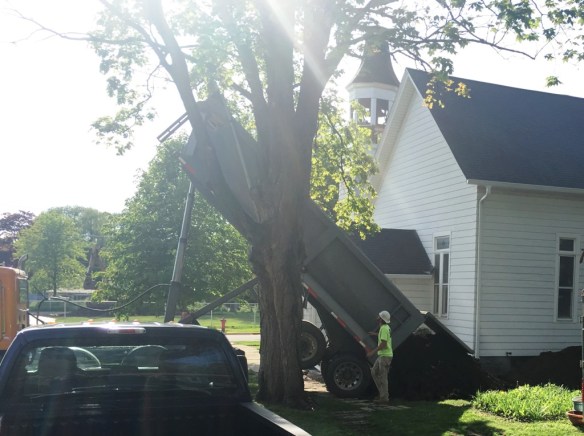
dump truck
The view from my windshield: Dumping a load of dirt.

As I exited my truck, I heard the foreman telling Tyler he had two more loads. Did he want them?

“Yes! I’ll take all the dirt you’ve got!” Tyler told him.

The semi truck and the foreman left the scene, and Tyler, sipping a beer, regaled me with the story of his score.

school dirt digging
The origin of the dirt: It came from the school yard across the street.

That morning, Tyler was knee-deep (quite literally) in his garage foundation construction project. He noticed an enormous backhoe digging a hole in the here-to-fore green yard of the elementary school. Huh, it had looked like the construction workers over there were wrapping things up, and now they were turning new soil.

Naturally, Tyler didn’t let curiosity gnaw at him. He walked over to find out what was going on. He was told they were building a turn-around for trucks that delivered lunch to the school.

“What are you doing with all that black dirt?” Tyler asked. It was rich, beautiful black dirt (if dirt can be beautiful—apparently, the blacker the dirt, the more organic matter and nutrients are in it).

“Haul it away, I guess,” the foreman told him.

Tyler offered to let them haul it one block. Straight to the church. His offer was one the foreman couldn’t refuse. Rather than pay a driver to haul it an hour away, he could niftily get rid of it only a block away.

“We’d pay $600 a load for black soil of that quality,” Tyler told me when I expressed disappointment that his score turned out to be … dirt. Only a gardener could appreciate the value of dirt; I was not a gardener.

two loads of dirt
That’s a mighty lot of dirt.

Well, we were the proud new owners of four semi-loads of black dirt, enough for a king-sized berm.

“The timing is perfect,” he continued. “I’ve got a grader right now to move it around.”

Indeed, he did. His cousin had lent his to us for our garage project.

Lucky us.

# # #

Today’s headline is a quote from the Dalai Lama.

Tomorrow: Chapter 26 tells the story of ancient technology. Read about it here.

Every flower that blooms has to go through a whole lot of dirt

Our story so far: While we renovated the old Methodist church into our home, construction workers were building a new addition to the elementary school across the street.

# # #

One afternoon as I was returning home after an afternoon of cuddling with our new granddaughter, I checked in with Tyler. He was breathlessly excited on the other end of the line.

“Oh boy, did I ever score this afternoon! What a score! Come straight to the church and find out what I scored!”

Apparently, he scored. Something.

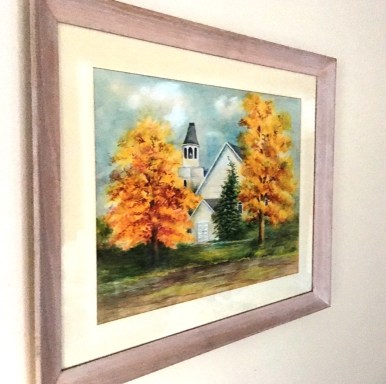
church watercolor
A former member gave us this framed watercolor painting of the church.

I began conjuring up what would thrill him so. Recently, we had given a former member of the church a tour, and she gifted us with a watercolor painting of the church that had come into her possession. It was beautiful and meaningful, and we would certainly hang it in the hall of history. Did some other interested party drop off something equally significant? Or maybe he found something in the church. Another member mentioned losing a class ring in the church yard—did he find it when he was digging around? Alas, no class ring turned up, but maybe Tyler found something else—a piece of jewelry? A time capsule? Gosh, he sounded so enthused. Maybe he came into some money from some unknown benefactor. What could it be?

As I pulled up in front of the church, a semi-truck blocked the street. The back of the truck was filled with dirt, and some unknown foreman was directing the driver to dump his load.

In our yard.

I began getting the picture that it wasn’t jewelry he found.

# # #

Tomorrow: The benefactor is revealed. Read about it here.

Tale of two buildings

Our story so far: Over the course of six months, we’d made good progress first demolishing then building inside the 126-year-old Methodist church we were intent on turning into our home. When spring arrived, we began work on the garage and yard.

# # #

Chapter 25

When we closed on the church in November, we were consumed with our own little construction project, blithely unaware of one occurring right across the street.

Sure, we could see something was going on over there in the elementary school, but to our uninitiated and self-centered eyes, it was just another remodel or addition or whatever it was, just steer clear of our construction vehicles, we’re doing important work over here.

Of course, school construction projects are enormous community affairs given they are publicly financed and ultimately house a precious commodity: Children. Whatever was going on over there was a big deal to everyone but us.

I learned later from local folks who took an interest in our project and toured the church that the only original part of the school that was left—built in 1908—was razed just a few months before we moved to town (imagine the circus surrounding that! We filled two dumpsters; the school probably filled fifty!). The construction workers we saw coming and going were working on a building to replace the decrepit structure. The people who mentioned it to us were a little bit nostalgic about the demolished building. First the school got torn down, then somebody purchased the old church with plans to do who knows what to it. The wistful ones were kind to us, but a little sad.

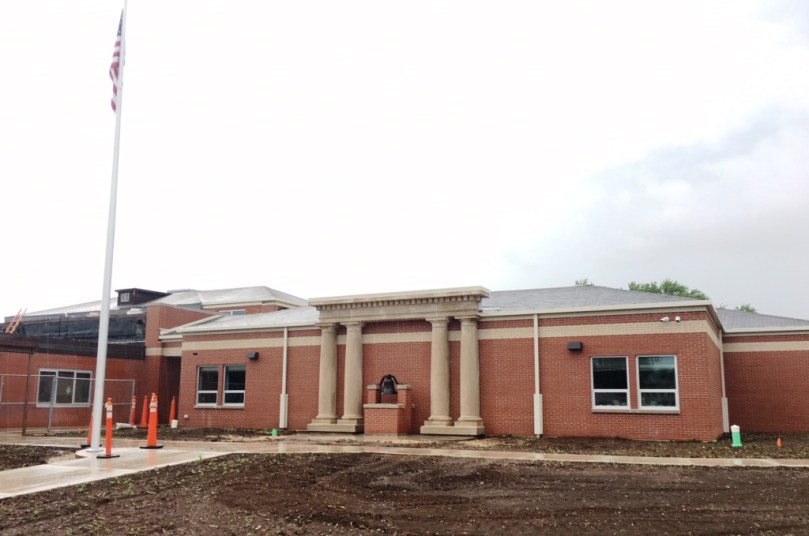
school
The lawn in front of the new school building looked ready to be seeded or sodded.

Just as we chipped away, little by little, on our renovation, the school district made steady progress on theirs. By springtime, we could see workers paving a parking lot, surely a sign they were nearly done. A monument of sorts containing what looked like the old school bell was erected. Ah, another historic bell. This one had probably been used to begin many school days long ago. So the district was paying tribute to what had gone before, just as we were.

school bell
Ring my bell. No ladder required.

# # #

Tomorrow: Tyler makes a score. Of something. Read about it here.

We only needed one shade of grey

Our story so far: As we renovated the old Methodist church into our home, we chose stone for the fireplace and the counter tops, and we were pleased with the poured concrete for the garage.

# # #

The easiest stone to install at the church was the decorative rock we purchased to border the exterior.

The gravel that was there was old, tired and indistinct. Tyler wanted to freshen up the look, so he took me to the nearby landscaping supply store (where we had ordered a fireplace hearth) to browse the options. In the past, we might have used fresh mulch next to the foundation of the church, but we did that with the first house we owned together, and it just invited bugs inside. So we left the mulch to insulate the roots of the bushes on the perimeter of the church property.

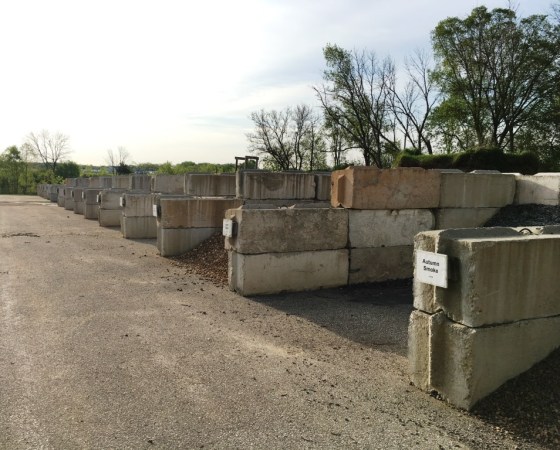
stone options
Concrete bins as far as the eye could see offered up gravel options.

Until that morning, I had no idea there were so many different gravels, rocks and crushed stones with which to decorate a yard. Like to many things in my life, I just wasn’t paying attention. We could choose from every shade of gray and brown, plus a few blues and reds, in every size from pea gravel to boulders.

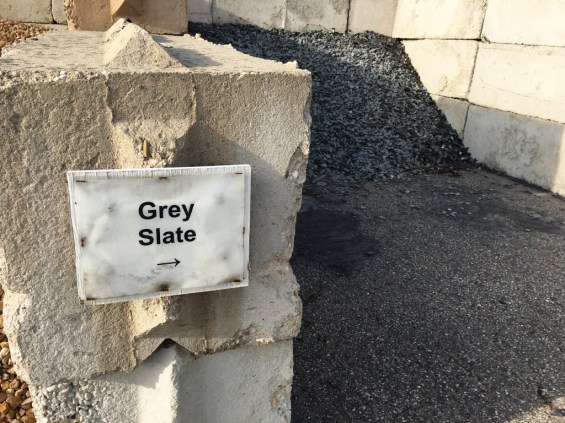
grey slate
Grey Slate: Hmm, that would be a great nom de plume for a romantic novelist.
slate close up
Gravel with flare.

We were drawn to the grey slate with its rocks shaped to skip across a pond. It glittered in the sun with fifty shades of grey, mind you, not gray. I liked the cool blue hue which I didn’t know at the time but was very pleased to realize coordinated perfectly with the color the foundation was already painted.

We also chose some edge stones. Tyler and his hired man St. Johnny sweated it out to place the stones and spread the slate, and when they were done, it rocked.

slate in situ
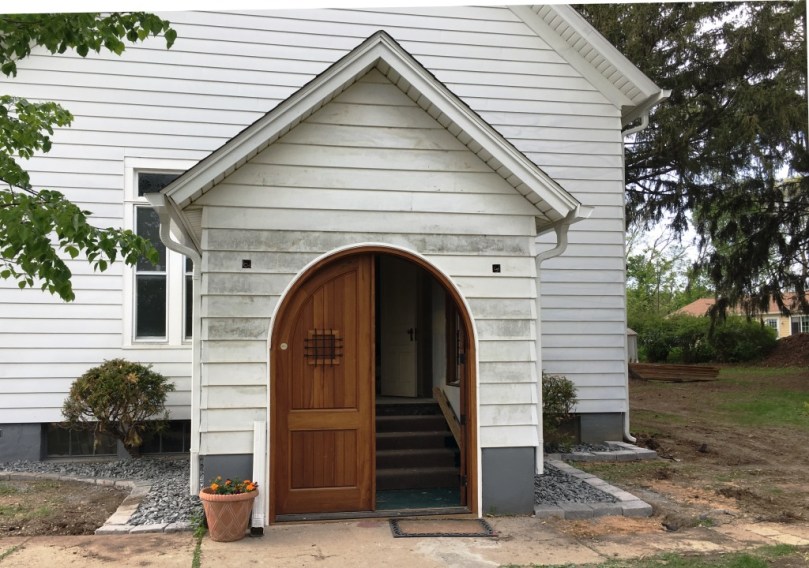
The church, in her new grey slate flounce, is winking at you.

# # #

Tomorrow: Chapter 25 opens with the story of another construction project. Read about it here.

The foundation for all that will be mancave

Our story so far: We were in the midst of the heavy lifting—it was all things stone—for the old Methodist church we were turning into a residence.

# # #

The footings had been poured. Untold loads of gravel hauled in. The steps formed.

After a couple of rain delays, it was time to pour the foundation for the garage.

Tyler was so excited that day, he got up even earlier than normal. He couldn’t wait for me to provide breakfast. He left before I got out of bed and pressed McDonald’s into service.

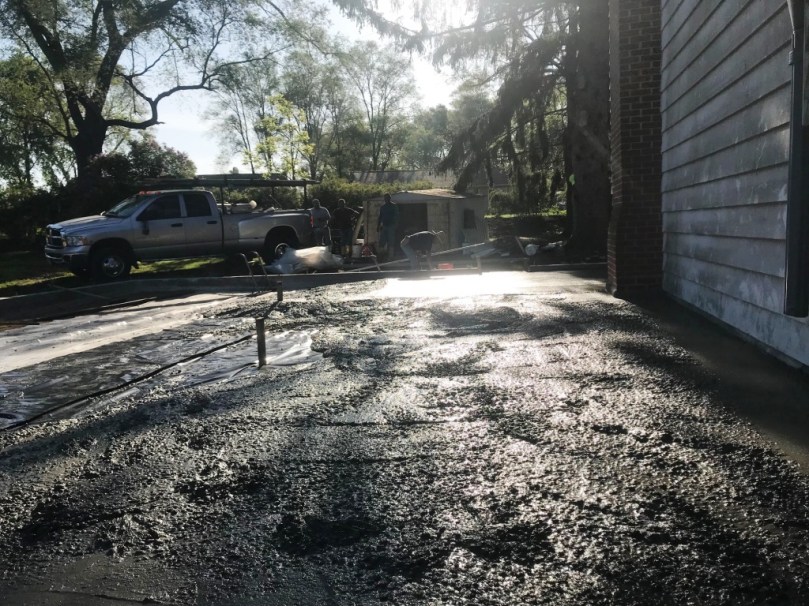
concrete pouring
Dawn breaks over the foundation job.

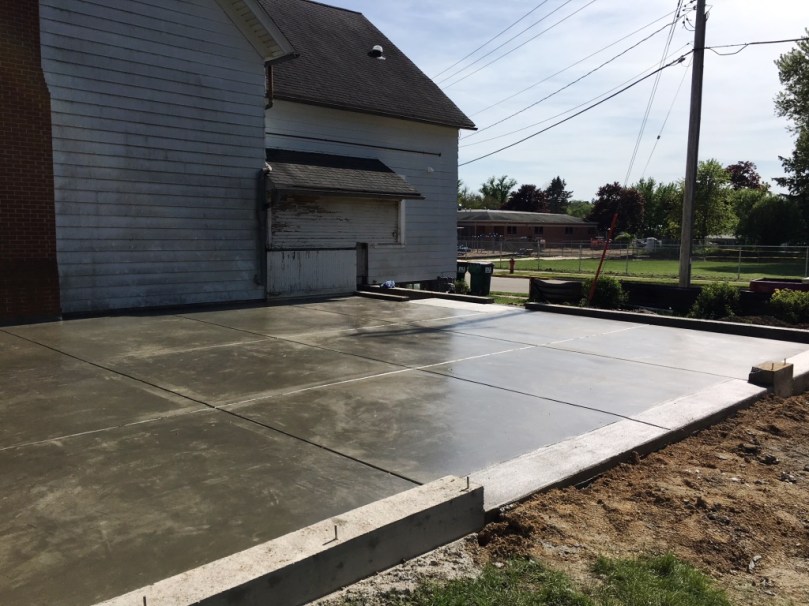
Tyler had ordered 6-1/2 bag mix concrete, the importance of which, like nuances of 5/8-inch drywall versus half-inch drywall, escaped me. The higher the number of cement bags added to the mix, the stronger it is and the better it performs when exposed to freeze-thaw cycles, as our garage would be on the north side of a southern Wisconsin house. Something about how the finishers finished the edges of the concrete also pleased Tyler.

All I knew was that it looked mighty smooth and flat when the day was done, which is all you can ask for in a good floor.

finished foundation
So smooth you can see your reflection.

# # #

Tuesday: Chapter 24 concludes with a few chips off the old block. Read it here.