The texture of water

Our story so far: We wanted to renovate the 126-year-old Methodist church in a responsible manner since we were going to live in at some point.

# # #

Since we were getting so good at these tests of safety and otherwise, we sprang for a few more.

The Roto-Rooter man scoped our sewer pipes, and his water-proof camera determined our pipes were as clear as a baby’s arteries—no tree roots or obstacles.

So our inside plumbing was in good shape (the little we had of it, what with only a kitchen sink and a half bath). We had our expensive city water tested to reassure ourselves about the quality of the pipe connecting the church from the street. Returning a six-page report, the lab proclaimed our water safe. Yay! (For the price, it should be.) But we also learned it was “very hard” at 25.56 GPG (grains per gallon) and was close to the upper limit set by the Environmental Protection Agency in estimated total dissolved solids. This meant it had a lot of stuff in it (think: dirt). None of the “stuff” was considered a contaminant, but let’s just say it had a little more texture than one might like in a quality glass of water.
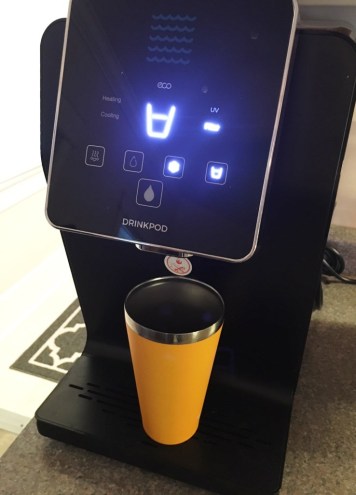
drinkpod
The instructions that came with the Drinkpod recommended getting a plumber involved, but Tyler was proud he installed it at our rental house without one.

This meant we would be investing in a total house filtration system and a Drinkpod purification appliance. A Drinkpod is a countertop water cooler with a four-part filtration system and ultra-violet sterilization system. This appliance would become the centerpiece of our beverage bar, the section of our kitchen devoted to all things drinkable, from coffee and sparkling water to beer and wine.

And we weren’t done testing yet. We tested for radon in the basement. Radon is a colorless, odorless radioactive gas that is the No. 1 cause of lung cancer in nonsmokers. Our result was only 1.2 pCi/L (picocuries per liter of air), well below the EPA action level of 4 pCi/L.

Ah, deep breaths.

When we were done, we’d spent more than $300 on various safety equipment and that much again on various safety tests. But our final test wasn’t about particles and particulates. It was about structural support.

# # #

Tomorrow: Old houses are like old ladies: They get saggy. Read about it here.

Well, I have good news and bad news

Our story so far: We tried to be careful and responsible as we demolished the interior of the old Methodist church we intended to turn into our home.

# # #

We also were warned we had asbestos in the walls.

If one thought lead and mold were bad, exposure to asbestos was known to cause lung cancer. And eliminating it was expensive. In fact, it was asbestos that had scared us off from going through with the purchase of a church in Pecatonica at one time.

On this project, however, we’d gotten such a good deal on the church, we figured if we found asbestos, we could afford to pay to get rid of it.

One former parishioner reassured us that only love flowed from those walls, and we believed her. But unlike some matters related to a church, this one we could test. We sent three samples to the laboratory: main floor ceiling tile, main floor wall sample and basement flooring, which looked a little suspicious to us. Within twenty-four hours, we’d learned the ceiling and walls on the main floor were mostly cellulose with no asbestos. Cause for celebration!

basement floor tile
This was an attractive and durable floor covering in its time. But it was not “rustic transitional” and would have to go.

The avocado green basement floor tiles lovingly installed by a couple who were active members of the church when avocado green was in vogue, however, were 3% chrysotile, a Category 1 asbestos-containing material. Category 1 was the least bad of the three types of asbestos, that is, not brittle, breaks by tearing rather than fracturing and does not easily release asbestos fibers upon breaking.

We got a reasonable quote for professional asbestos abatement, but since our structure was now privately owned, we could legally get rid of it ourselves. When we were ready to refloor the basement, we had the Tyvek suits, goggles and respirators to scrape up the flooring if we decided to go that route. But in the meantime, as long as we didn’t disturb the floor tile, we’d be fine.

# # #

Tomorrow: Hey, this testing business is fun! Read about it here.

Rehab involves four-letter words: Lead and mold

Our story so far: We proceed with caution as we renovate a 126-year-old Methodist church into our home.

# # #

Immediately after putting in the offer on the church, our real estate agent sent us a seventeen-page brochure, “Protect Your Family From Lead in Your Home.”

“Many houses and apartments built before 1978 have paint that contains high levels of lead,” the pamphlet warned. The list of health hazards read like a drug ad in an AARP publication: Lead from paint, chips and dust can cause high blood pressure, nerve disorders, muscle and joint pain, memory and concentration problems and digestive problems.

Eek.

So when we finally got inside the church, we tested a number of surfaces. No lead.

Then more than one former parishioner in the church suggested we had a mold problem. The list of symptoms from mold allergies was worse than lead exposure: Everything from runny nose and coughing to internal bleeding and death.

Tyler scoffed at this notion that we had anything more than a pedestrian mold problem, but we disposed of anything porous that was in the basement (where we had witnessed a water problem). One warm December day, early in the demolition process, Tyler donned his Tyvek suit, a respirator and safety goggles and power-washed the entire basement, including the furnace room which once in its history had a coal chute.

Only a Virgo.

# # #

Tomorrow: We get the results of an asbestos test. Read about it here.

Safety doesn’t happen by accident

Our story so far: Despite what people might have assumed about the recklessness of a pair of 50-somethings in purchasing a 126-year-old building to turn into a home, Tyler was a businessman who’d heard too many horrific insurance claims to pursue a daredevil approach to construction.

# # #

The hazards of remodeling a building as old as the church were many, and we were warned by many well-intended bystanders.

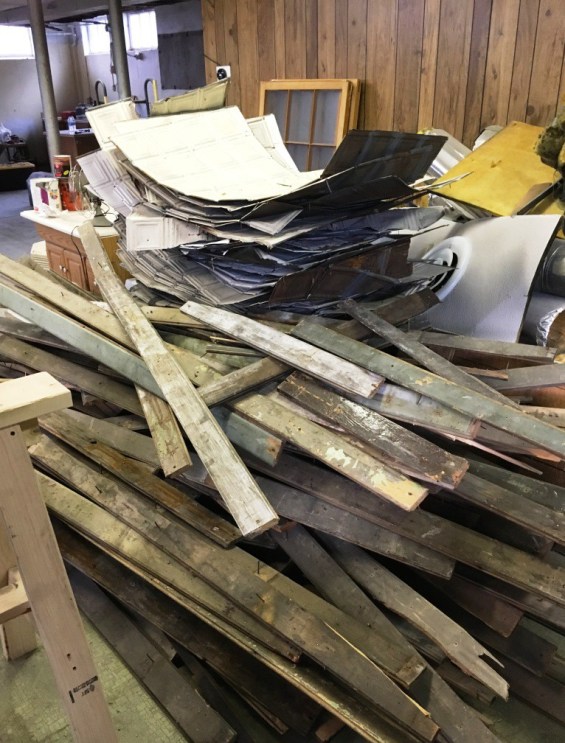
nails and tin
That’s a pile of tin ceiling on the pile of scrap wood.
one million nails
You think I’m kidding about removing a million nails.

Long before we’d closed, Tyler had already made investments in face masks and safety glasses, purchased in bulk. These came in handy as we removed millions of nails from trim and crown molding (I might be exaggerating about the volume of nails, but not much). Tyler also bought work gloves for the hired man and for me. One of the pairs for me were Level 5 cut-resistant rated; I didn’t even know such a thing existed, but I was grateful for them as we loaded and unloaded scrap metal into the pickup. All this safety equipment was de rigueur when Tyler and St. Johnny removed the tin ceiling in the basement. Since we hoped to reuse the material again, someone standing on a ladder had to peel off each piece of sharp-edged, dust-covered tin, sheet by sheet. The basement was already expansive in square footage, but it gained space in our minds as they spent hours on this task. And I was amazed at the debris that must have fallen from the ceiling (and elsewhere) as I went through Tyler’s jacket pockets on laundry days.

As one might expect of a building constructed only twelve years after the invention of the electric light bulb, the wiring Tyler discovered in the church was like a trip through time. Cloth-wrapped 12-gauge copper wire in conduit and ArmorFlex wiring was mingled with current code-approved Romex wiring. With an abundance of caution (we certainly didn’t want all of our hard work to burn to ashes), all of it would be replaced. And the existing 100-amp circuit breaker box? It would be exchanged for 200-amp service (Tyler confided he could reuse the 100-amp box in the garage).

# # #

Tomorrow: Do they have a test for that? Read it here.

The pitfalls of a cathedral ceiling

Our story so far: We purchased a 126-year-old Methodist church to turn into our home, and all through the demolition process we found a lot to love in the literal corners of the building and encountered supporters in various metaphorical corners.

# # #

Chapter 15

The final 10 percent of a project is the hardest, and this was true of the demolition phase of ours.

The first 90 percent was no cakewalk. Sure, we revealed some beautiful architectural elements of the church, and that was rewarding, but it required back-aching work. And then there was the suspended ceilings, plaster and lathe, old carpeting, basement pass-through, walls, doorways. Well, it amounted to two thirty-yard dumpsters worth of debris.

ceiling prior to demo
Tyler demolished the choir loft side of the sanctuary ceiling, but that left the other side. And those decorative beams.

But that still left the ceiling of the sanctuary. The twenty-foot ceiling of the sanctuary.

Shortly after we’d closed on the church and realized we’d thrown out the remote controls for the ceiling fans in the sanctuary, Tyler climbed on top of a six-foot rolling baker’s scaffold in order to install pull-chains to the fans to get them to operate. It didn’t work. But Tyler did learn something: His baker’s scaffold shook something awful as he stood there fiddling with his arms above his head, and he didn’t like it. And besides, a six-foot-three man standing on a six-foot scaffold was still eight feet short of the top of the ceiling. (This is probably why most standard family homes don’t have such high ceilings, but I didn’t think of that when I fell in love with the open space.)

As he demoed the rest of the church from a safe altitude, Tyler pondered how he might safely take apart the sanctuary ceiling and put it back together again. Despite what people might have assumed about the recklessness of a pair of 50-somethings in purchasing a 126-year-old building to turn into a home, Tyler was also a businessman who’d heard too many horrific insurance claims to pursue a daredevil approach to construction.

# # #

Tomorrow: We take action to combat potential dangers. Read about it here.

Black and white and read all over

Our story so far: People in town are talking about our project, to turn a 126-year-old Methodist church into our home.

# # #

News of our project reached the ears of an alert reporter at a nearby weekly newspaper, and he arranged a visit to our work site, where the interior of the church was mostly demolished.

He arrived one cold, bright morning, and we dodged the drywallers’ scaffolding in the sanctuary to show him around. I admired his wiry beard, and he mentioned he’d been in the church more than once covering church dinners and news of the local food bank, which operated out of our basement for a time.

“What do people in town think of your plans?” he asked me.

“Well, everyone who’s talked to us has told us how happy they are we are fixing it up,” I said. “But I think people who might be unhappy probably aren’t telling us about it. Why? Have you heard otherwise?”

“No, no, I just heard you had big plans to improve the place.”

Whew.

It was odd being interviewed, and I found myself wondering how people felt when I interviewed them twenty-some years before when I was a newspaper reporter, but the interview was mostly painless, fun even. As with our other visitors, we regaled him with our plans until his eyes started darting around, looking for an exit. He took a few photos, and beat a hasty retreat—a weekly newspaper reporter is a busy person, I knew, and other news was surely calling to him.

When the story came out, Tyler was disappointed we hadn’t made the front page (I was a little relieved), but he purchased five copies of the newspaper to bring home. I was happy to see the reporter included nice comments from the former pastor and one of the planning commissioners who happened to live nearby.

The building needed a lot of expensive repairs, and the dwindling congregation could not afford them. “This is the best of all outcomes,” the former pastor told the newspaper reporter.

I derived great satisfaction from cutting the story out of the newspaper to mail to my grandmother, with whom I had been a pen pal for the better part of three decades. She was only a month shy of turning 103, and I found it apropos to share news with her about a century-old structure that was getting some love.

# # #

Tomorrow: Chapter 15 opens with a mantra: Safety first. Read it here.

Add one cup kindness, stir with hospitality and serve

Our story so far: As we demoed the interior over the course of a number of weeks, we met a number of people interested in our Methodist church conversion project, including the pastor of the nearby Congregational church.

# # #

In addition to a warm invitation to join the worship service sometime, Pastor Jennie also gave me a great gift: Copies of two church cookbooks, one from the Congregationalists and one created by the very congregation that had once inhabited our Methodist church. As she handed them to me, she noted the Congregationalists did this thing well: Feeding people. This was clear after seeing their basement kitchen, easily four times as big as the one in the church we had purchased.

Thumbing through the pages of the Methodists’ book, I recognized some of the last names of people who had introduced themselves to us as former members. This recipe book, created to honor the sesquicentennial of the congregation in 2009, was a historical gem. It included recipes from the congregation’s first known church recipe book in 1912 and from one printed in 1950. One 1912 recipe for “Chicken” began with “wash and be sure to remove all feathers” and the instructions included: “Cook until tender. If it should be an aged rooster it may take two days.” I bet even the aged rooster back in 1912 was tastier than the bland mass-produced chickens of today.

An interesting recipe for Jezebel Sauce contributed by Karen Hill Krolow caught my eye. Jezebel, whose story is told in the Bible’s Books of Kings, was a Phoenician princess who married an Israelite king. She did not, however, believe in his God; she worshipped Baal and forced her religion on the Israelites; she ultimately died a gruesome death. It makes perfect sense that an evilly delicious sauce named for this bad girl of the Bible would be good for ham since pork was on the list of food no-nos for the Jews.

Jezebel Sauce

Ingredients:

  • 1 (15-ounce) can crushed pineapple, drained
  • 1 (15-ounce) jar apricot preserves
  • 1 tablespoon dry mustard
  • ¼ cup good horseradish (German)

Instructions:

  1. Mix equal parts of pineapple and preserves.
  2. Add mustard and horseradish. Serve with ham.

Another recipe in the book is the only one billed as “award winning,” so I feel like it would be selfish not to share it here. Kathy Hill contributed the recipe for Mom Blakeman’s Pound Cake, noting that it won third place at the county fair:

Pound Cake

Ingredients:

  • 2 cups sugar
  • 1 cup butter
  • 5 eggs
  • 2 cups flour

Instructions:

  1. Preheat oven to 300 degrees. Cream sugar and butter until light.
  2. Add eggs—one at a time—alternately with 2 cups flour, mixing thoroughly after each addition.
  3. Use two wide loaf pans. Butter pans BOTTOM ONLY [apparently this is very important as it is in ALL CAPS], and line with two layers of wax paper.
  4. Bake one hour. After cakes are cool, remove from pans and roll in powdered sugar.
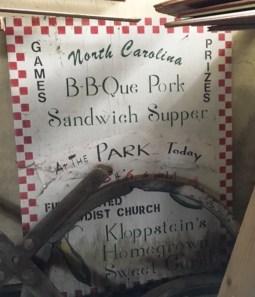
sign
Pondering how to repurpose this sign.

At some point later, I will share Betty Lyerly’s North Carolina B-B-Que Pork recipe, the recipe used at the Methodist Church’s barbecues. Evidence of these community meals was left behind at the church, where we found the hand-painted signage for them. I don’t know why we kept the sign, but I felt compelled to do so, stacking behind some of our other wood designated for reuse.

# # #

Tomorrow: The rezoning hearing. Read about it here.

Throughout history, small churches do their part

Our story so far: Interacting with folks interested in our church conversion brought us historical information, intel on local contractors and community activities.

# # #

One day just as Tyler finished showing yet another contractor around the church in order to coax a bid out of him, a friendly young woman stopped by and introduced herself as the pastor of the nearby Congregational church. She welcomed him to the village, and invited him to have a look at some of her church’s historical record.

This piqued our curiosity because our Methodist congregation and the Congregational church had been yoked from 1974 to 1985, so we thought the Congregationalists might have some history of our church we hadn’t yet heard.

A few days later, I had the pleasure of enjoying coffee with Pastor Jennie and a couple of friendly parishioners of the Congregational church. They showed me around, and we paid special attention to the historical details of the church (it had been built twenty-six years before ours) and a twenty-foot-long bulletin board detailing the congregation’s history. We also looked into the written record, which provided a few examples of the little churches in our community having to weigh in on far bigger societal and political issues through the course of history.

In one example, the local Congregational congregation (say that three times fast) had been meeting in our village before they built their church and before the Civil War, which stirred up a bit controversy. A newspaper story noted: “In 1857, the American Home Missionary Society decided to withdraw aid to churches whose members were slaveholders. The society paid part of the Congregational church pastor’s salary which prompted the church to go on record against the “sin of American slavery.”

Later, as it turns out, members of the church we were now converting into a home and the Congregational church had started a chapter of the Red Cross in our little village during World War I. Here is the story, as told in the careful handwriting of the Congregational church record:

Year of 1918

With the passing of the year 1918 our church like many others has passed through one of the greatest trials it perhaps has ever had to go through. We can proudly say we have stood the test and are now in as encouraging a position as we have been for some years.

Our pastor with the Methodist minister and a few others were instrumental in getting the Red Cross started here. As the War continued and conditions became more serious more and more people became interested in the great movement until now the village has a fine large auxiliary. In the Red Cross world our church has not failed to do its duty in giving both of time and money. …

We are all very glad we could do as much as we did in a time of great need. We have all learned the lesson of cheerful giving so in the coming year let us do our part.

# # #

Tomorrow: It wasn’t only issues of history our Methodist church had in common with the Congregational Church. They were interested in food, too. Read about it here.

What every small town in America has: At least one church and one bar

Our story so far: While we demoed the interior, we combed the town for information about the 126-year-old Methodist church we’d purchased to turn into a home.

# # #

Tyler became a lunchtime regular at the village watering hole, this one built appropriately on the banks of the creek in town. It was a typical Wisconsin bar that offered cold New Glarus beers, crispy fried cheese curds and a monthly meat raffle.

As all good neighborhood taverns are, this bar was a great place to catch up on gossip, and our church had become a subject of conversation. This worked in our favor as Tyler collected the names of local contractors; the bartender/owner was a great source of intel on that subject.

One day when I accompanied him there for lunch (chili, burgers and fries—no beer), I learned a group of women was scrapbooking in the back room.

“This place speaks my language,” I marveled. In a decade of working in the marketing department for the largest scrapbooking company at the time (a decade ago), I’d attended easily hundreds of scrapbooking events all over the nation and in the world. It was literally my job to go to one of these events with my personal photos and album and work with customers to learn what they loved, what they didn’t and their ideas for making our products better.

One of the more enthusiastic scrappers struck up a conversation at the bar where we were enjoying our hot bowls of chili on a cold day, and she invited me to the monthly scrapbooking workshop.

I felt honestly welcomed to town with that simple invitation. And a few days later, we’d get another one of those honest, small-town invites. We joked we went to church every day, but this invitation was to a real church service.

# # #

Tomorrow: Another church in the neighborhood shares history. Read it here.

Photos offer insight into the history, soul of the place

Our story so far: A church historian helps us research the history of the 126-year-old Methodist church we purchased to convert into our home.

# # #

basement cross section
The basement walls were sixteen inches thick.

The blueprints shared with me by the church historical society described the furnace room in the basement (the church was heated with coal, which had been converted to gas forced air at some point). They also included a drawing of the cross-section of the sixteen-inch basement walls, which we’d already figured out were quite substantial.

In the early ’40s, according to the newspaper, the church was remodeled to change the seating from east-facing to north-facing, and the new entrance—the one where we now planned to install castle doors—was added.

The archive included a copy of the photo Tyler and I saw hanging in the entryway of the church where the congregation had merged and a grainy picture of the church in 1959. But we were hungry for more.

A few days later, we stopped by the local public library. There we found two more photographs of our church.

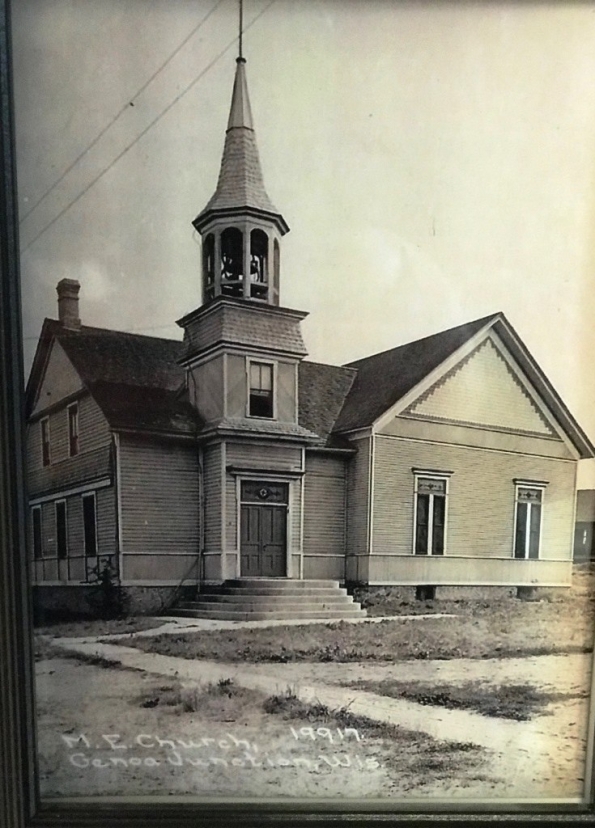
Library 1
Did the caption number “19917” indicate a date or something else? Check out that elaborate spire on tip-top the belfry.

The first might have been taken when World War I began. It was labeled “M.E. Church, 19917.” The Methodist Episcopal Church [emphasis added] was founded in 1784; in 1939 it reunited with two breakaway Methodist denominations to form the Methodist Church, so the photo was taken before 1939 in any case. In it, a grand stairway leads to the front doors beneath the belfry; both the stairs and the doorway are gone now. The siding flanking the window in the belfry is hung in a chevron pattern; fancy painted shingles decorate the peaks. In Phase Six or so of renovation, we hoped to return that window to the belfry and return some of that interesting siding to the exterior.

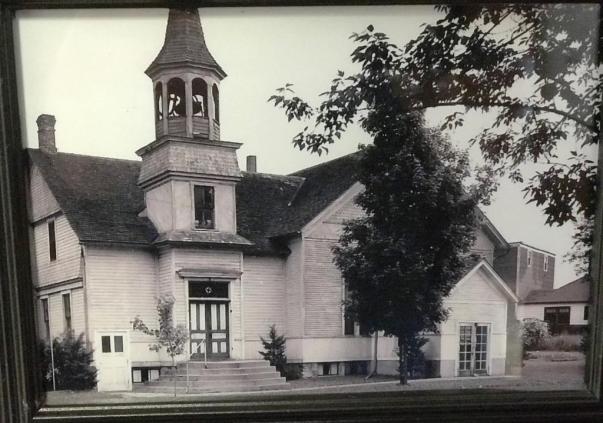
Library 2
Another, newer image of the church hanging at the library.

The second photo hanging in the library was taken sometime after the early 1940s. In it, one can see the former entrance under the belfry and the new entrances to the basement and to the sanctuary. The new sanctuary entrance had French doors (they were replaced at some point with the current red exterior doors); we hoped to install similar French doors inside as an entry to our master bedroom.

# # #

Tomorrow: A conversation at the local watering hole. Read about it here.