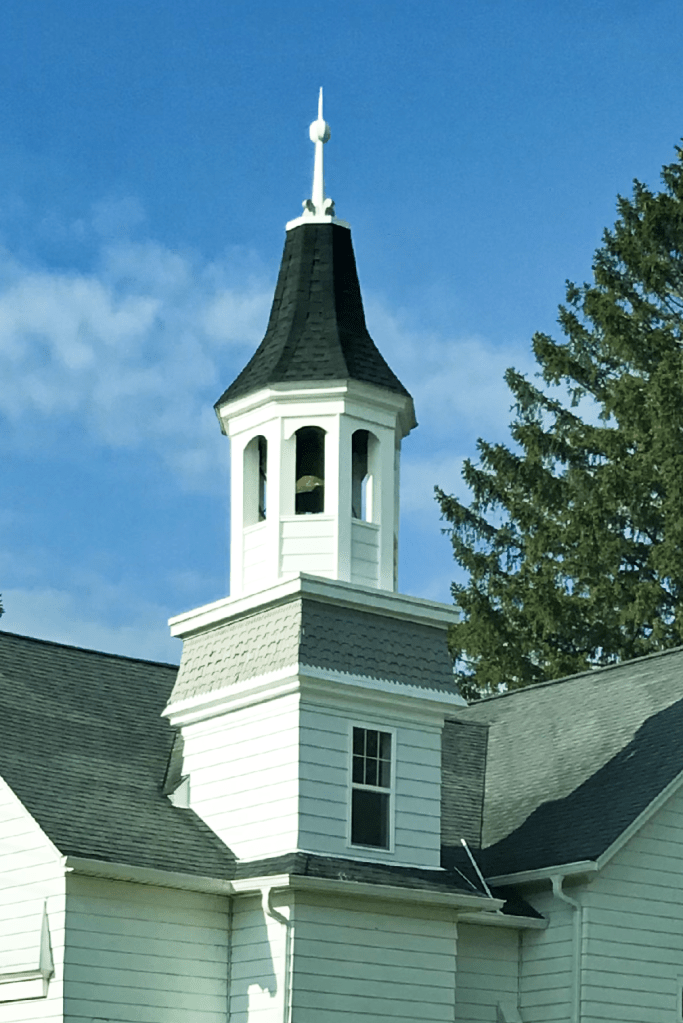
Living in a former church has a way of reorienting your sense of time.
Every day, I’m surrounded by evidence of faithful work done long before I arrived—craftsmanship meant to last, decisions made with future generations in mind, and spaces shaped for gathering, reflection and care. Renovating the building wasn’t about restoring it to some imagined perfection. It’s about stewardship: deciding what to preserve, what to adapt and how to honor what came before while making room for what comes next.
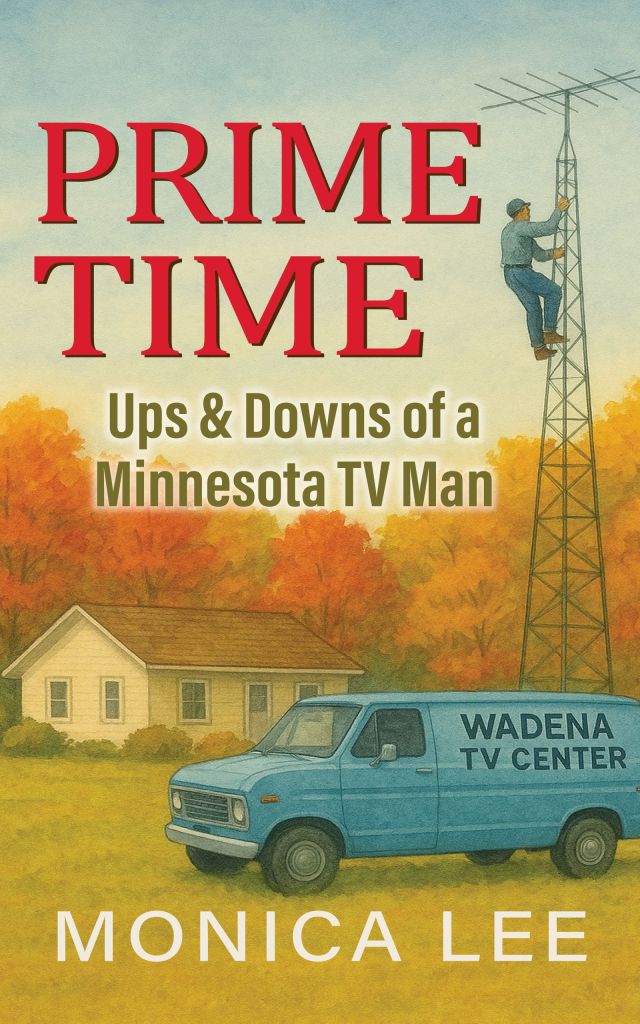
As I prepared to launch my new book, Prime Time: Ups & Downs of a Minnesota TV Man, out today, I keep noticing how closely these two projects—renovating a church and writing a memoir—mirror each other.
My book tells the true story of my father’s career in early television, a time when the medium was new, fragile and full of promise. His work unfolded in small-town Minnesota, far from the glamour we now associate with television. There were risks, setbacks and reinventions along the way. Like many lives, his wasn’t a straight upward climb (except on antenna towers), but a long arc shaped by perseverance, skill and showing up day after day to do the work at hand.
Writing the book required the same kinds of questions I ask daily in this chome of mine:
What is essential here?
What deserves care?
What would be lost if no one paid attention?
Old churches—and old stories—don’t always announce their value loudly. They wait. They hold their meaning quietly, hoping someone will notice before it’s too late.
As my husband and I worked on this space, we came to appreciate how much faith is embedded in physical labor. Someone once chose solid materials instead of cheaper ones. Someone repaired rather than replaced. Someone believed that what they were building mattered beyond their own lifetime. That same faith shows up in ordinary work—running a small business, learning a new technology, committing to a craft, raising a family—long before anyone calls it a “legacy.”
My father never set out to be remembered. He set out to do his job well. The book grew out of that realization: that a life shaped by responsibility, curiosity and resilience is worth recording, not for acclaim, but for understanding.
In many ways, this chome teaches the same lesson. It stands as a record of countless unseen acts of care: sermons preached and forgotten, meals shared, worries whispered in pews, decisions made with hope but no guarantee of outcome. The value isn’t in perfection. It’s in faithfulness over time.
Renovation, like memoir, requires restraint. Not every crack needs to disappear. Not every story needs embellishment. Some marks of age are evidence of endurance, not failure. The goal isn’t to freeze something in the past, but to let it continue speaking—truthfully—into the present.
As Prime Time enters the world this week, I’m grateful for the ways this former church has shaped my thinking about legacy. It has reminded me that stewardship isn’t about owning the story. It’s about tending it for a while and passing it on intact.
Whether we’re caring for buildings, communities or memories, the work is the same: notice what’s worth saving, honor it honestly, and trust that faithfulness—quiet, persistent, and imperfect—will speak for itself.
Today’s the day, folks! Get it now
Prime Time: Ups & Downs of a Minnesota TV Man is available today! Believe it or not, I don’t yet even have any copies myself. Thanks to a glitch in Amazon’s Kindle Direct Publishing, the copies I ordered a month ago haven’t yet made it to my door. But I have it on good authority that when you’re ordering a single copy, it comes mighty quick.
Paperbacks are $11.95. Ebooks (available instantly!) are $5.95.
Buy on Amazon here
Buy on Barnes & Noble here
 Church Sweet Home